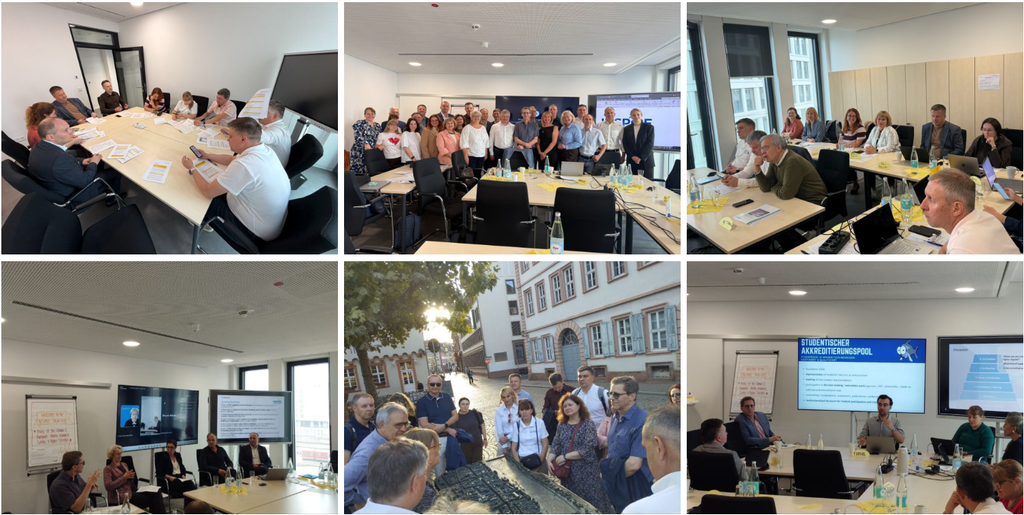
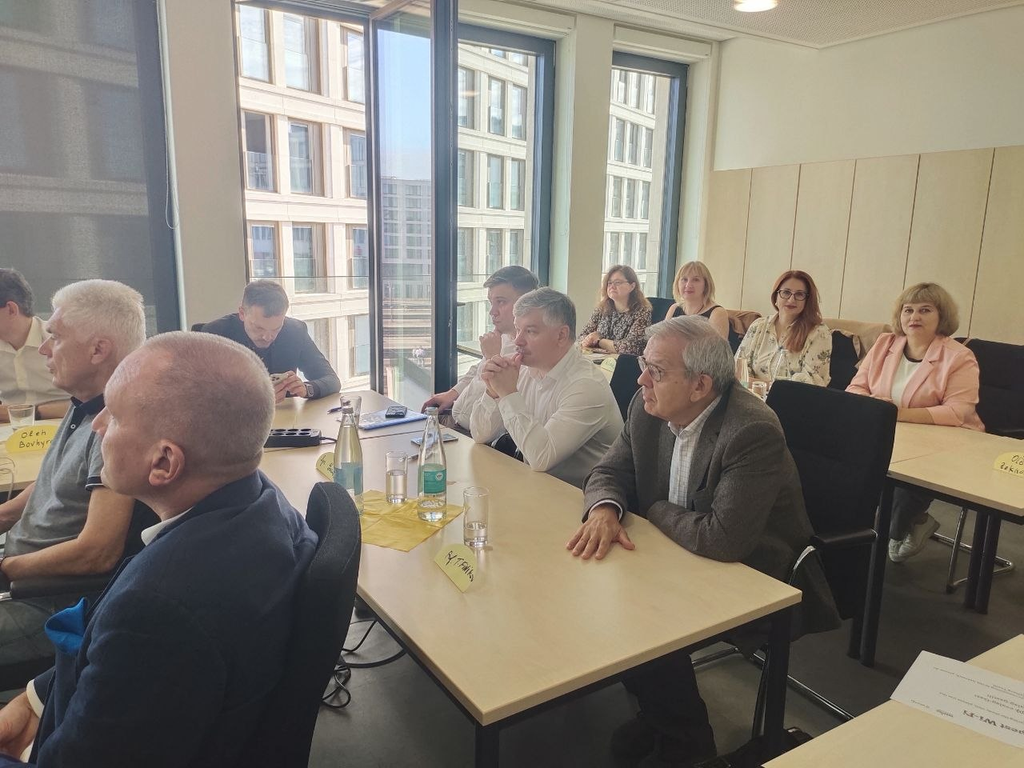
From 30 September to 2 October 2026, Yelyzaveta Hnatchuk and Tetiana Kysil, lecturers at the Department of Computer Engineering and Information Systems at Khmelnytskyi National University (KhNU), took part in a training visit in Heidelberg, Germany, as part of the European ERASMUS+ INSPIRE project. The main venue for the activities was EVALAG, the Evaluation Agency of Baden-Württemberg. The event brought together Ukrainian partners, experts and representatives of European educational institutions to explore best practices in quality assurance. Participants focused primarily on analysing the structure, criteria and mechanisms for quality assurance in higher education in Germany and the European Union. The meeting, held as part of the Erasmus+ initiative, provided a platform for aligning standards among the Ministry of Education and Science of Ukraine, the National Agency for Higher Education Quality Assurance (NAQA) and leading universities.
The first day was dedicated to understanding the structure of the German quality assurance system and the European Standards and Guidelines for Quality Assurance in the European Higher Education Area (ESG).
The second day focused on the practical aspects of external quality assurance and the institutional accreditation process. An important session featured Anja Grube, a representative of the German Accreditation Council (GAC), who shared her experience of decision-making in Germany’s system accreditation process and outlined its main development priorities. Participants put their knowledge to the test during a workshop in which they examined an anonymised case study through a role-play exercise, taking on the perspectives of university leadership, auditors and students. Considerable attention was also given to a panel discussion on transformations in higher education, digitalisation and academic freedom.
The third day of the visit focused on adapting European experience to the Ukrainian context. Together with a representative of the German Student Accreditation Council, participants discussed effective ways of involving students in the assessment of educational quality. During a practical group session, participants worked on developing components of a Ukrainian model of institutional accreditation. The team drafted initial accreditation criteria, outlined the sequence of procedures and identified tools for engaging with stakeholders. The outcomes will provide a basis for future methodological recommendations, self-assessment templates and assessment protocols for higher education institutions.
Alongside the intensive academic programme, the organisers arranged a cultural programme featuring guided tours of Heidelberg. The visit concluded with a review of the outcomes, the identification of next steps and coordination of follow-up activities.
The training visit marked an important step towards the modernisation and European integration of Ukrainian higher education.