From 14 to 16 September 2026, a delegation from Khmelnytskyi National University took part in a working visit to Dresden, organised within the framework of the Dresden–Stuttgart–Khmelnytskyi Solidarity Partnership and the U_CAN “Ukraine towards Carbon Neutrality” project under the Horizon Europe programme.
Khmelnytskyi National University was represented by Eduard Manziuk, Professor at the Department of Computer Science; Pavlo Radiuk, Associate Professor at the Department of Computer Science; and Liudmyla Remishevska, Head of the International Relations Office.
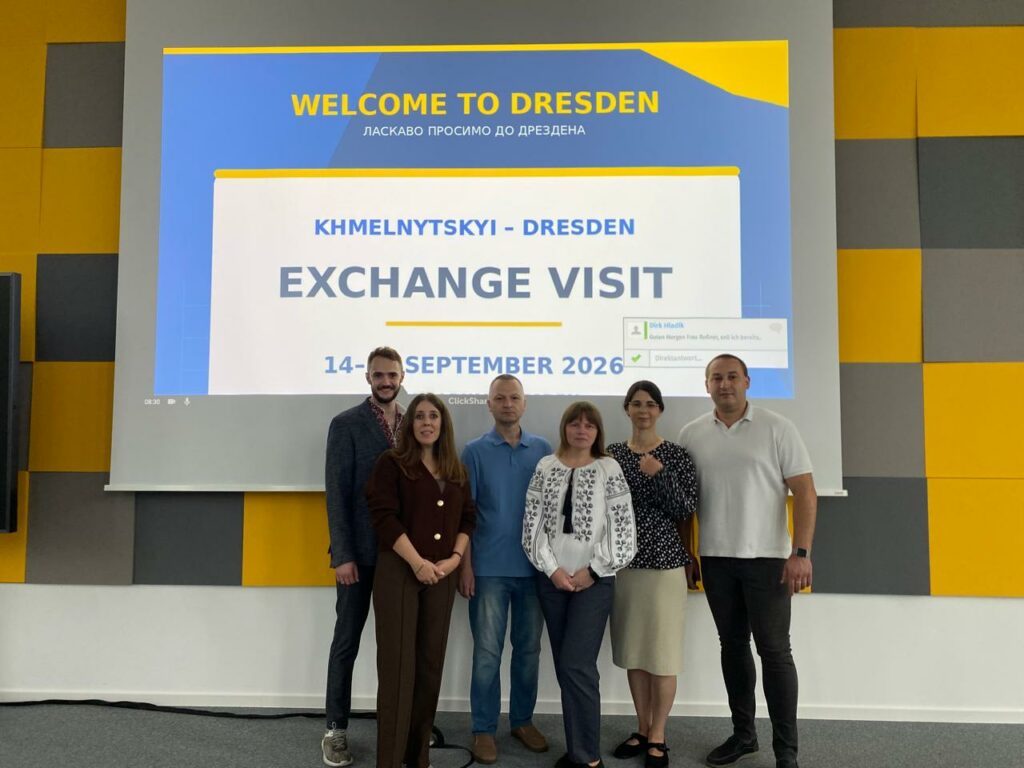
The first day of the visit began at Stadtforum, where Dresden’s Second Deputy Mayor Eva Jähnigen presented the city’s approaches to implementing its climate protection strategy. Dirk Gladik, a representative of the city, introduced the Ukrainian delegation to Dresden’s approach to municipal heat planning and the “Energielotse” digital advisory service.
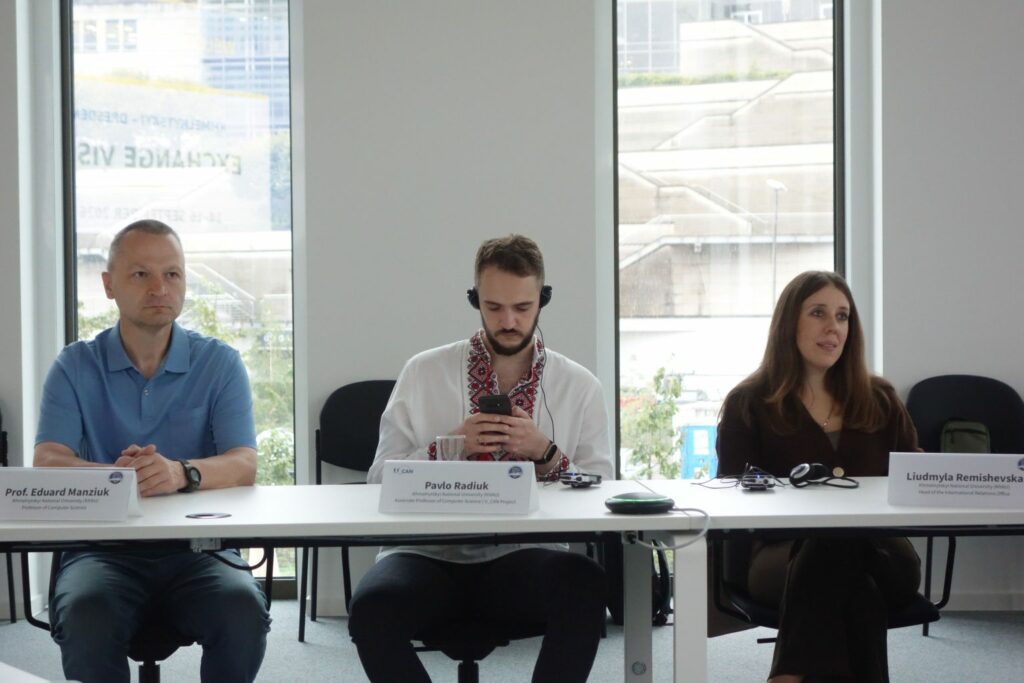
In the afternoon, the programme continued at WISSENSARCHITEKTUR – the Knowledge Architecture Laboratory of TU Dresden. Swati Kulashri conducted a U_CAN seminar on stress-testing scenarios. The seminar marked the final stage of work on four possible scenarios for the development of the urban transport system, which participants had begun in April and continued in L’Aquila in July.
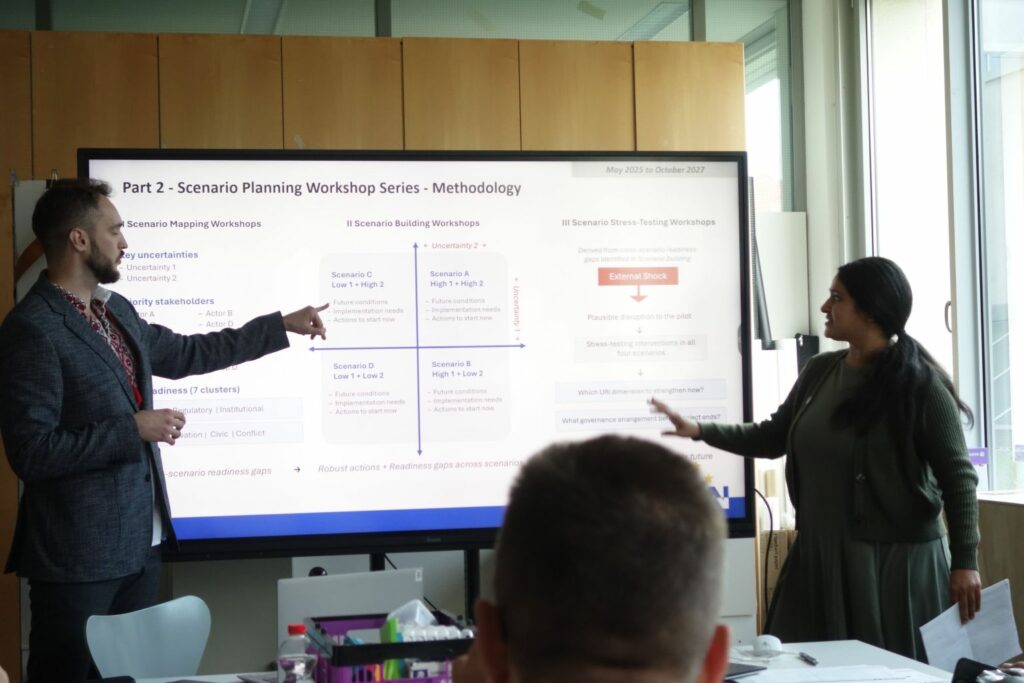
Associate Professor Pavlo Radiuk presented the Khmelnytskyi pilot project on adaptive traffic management, explained the city’s digital model and, together with the seminar participants, analysed the potential impact of each scenario on the implementation of the pilot solution.
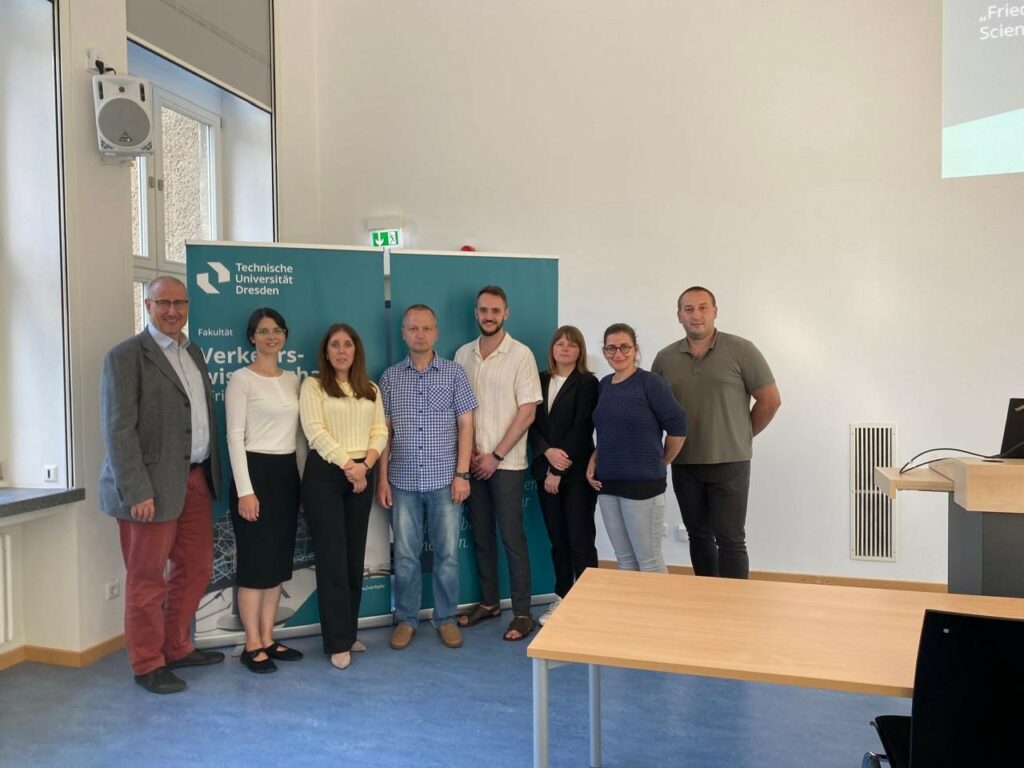
At TU Dresden, the KhNU delegation also met with Peter Rosenbaum, Head of the International Office. The meeting focused on the development of academic mobility, opportunities for student exchanges and further expansion of inter-university cooperation. Particular attention was paid to opportunities for KhNU students and staff to participate in international programmes and to developing new formats of cooperation between the universities.
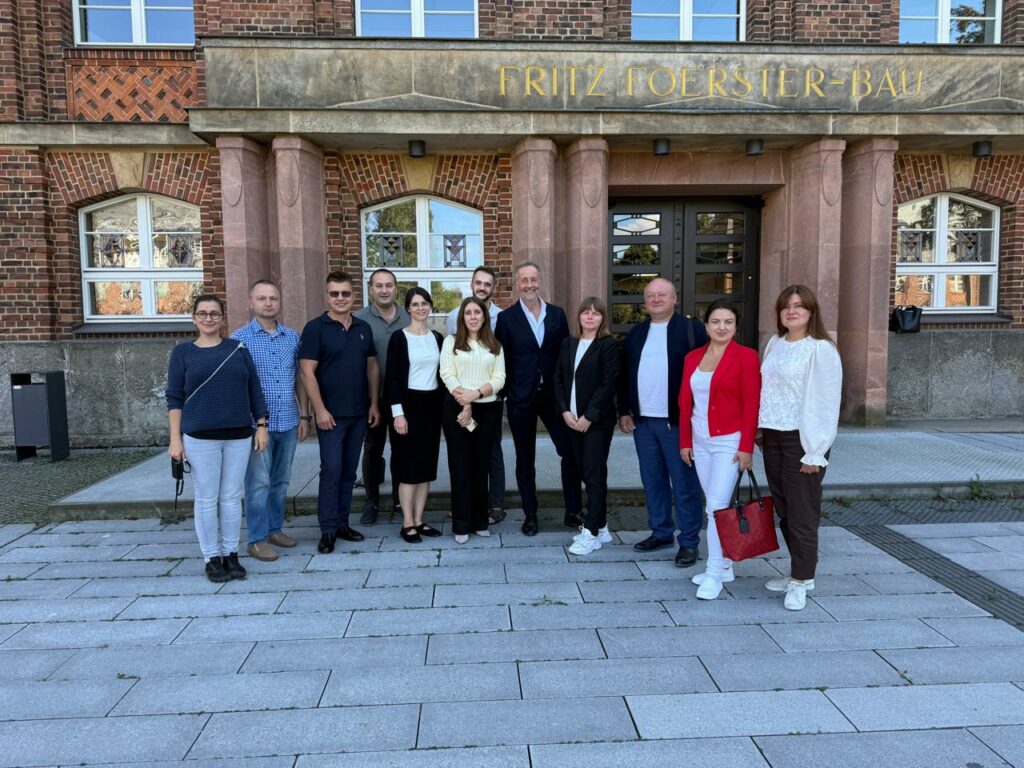
The third day of the working visit focused on waste management and the development of the circular economy. As part of the programme, participants learned about Dresden’s experience in this area, attended a presentation by Thomas Kügler and visited Stadtreinigung Dresden facilities.
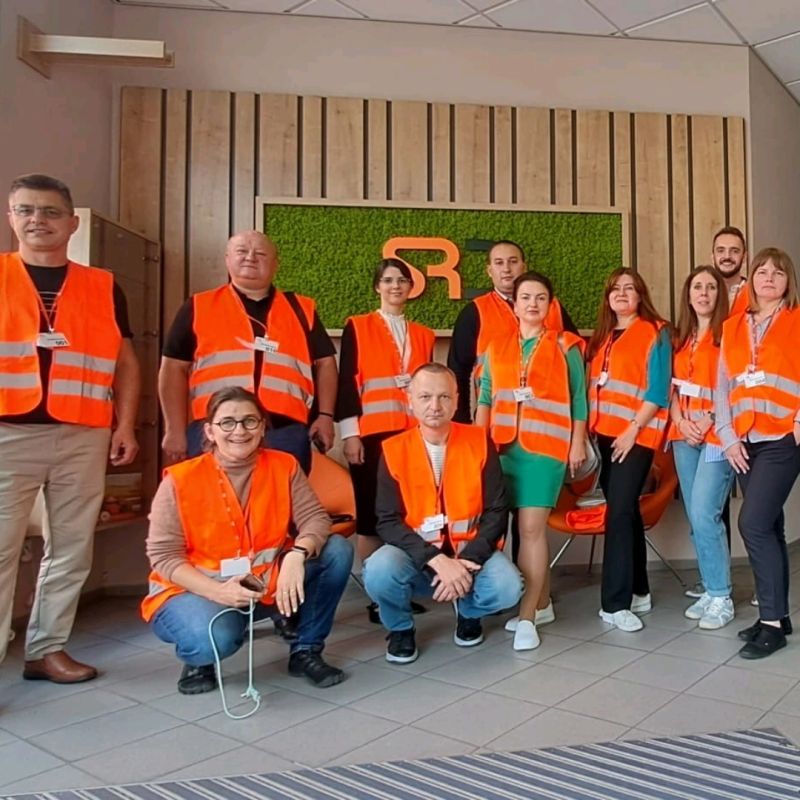
The programme continued with a visit to the Institute for Waste Management and Circular Economy in Pirna, where Dr Benjamin Schwan presented the institute’s laboratories and main areas of activity.
This area of work is directly related to research at Khmelnytskyi National University, including a project on the thermochemical conversion of polymer waste into liquid fuel, funded by the Ministry of Education and Science of Ukraine.
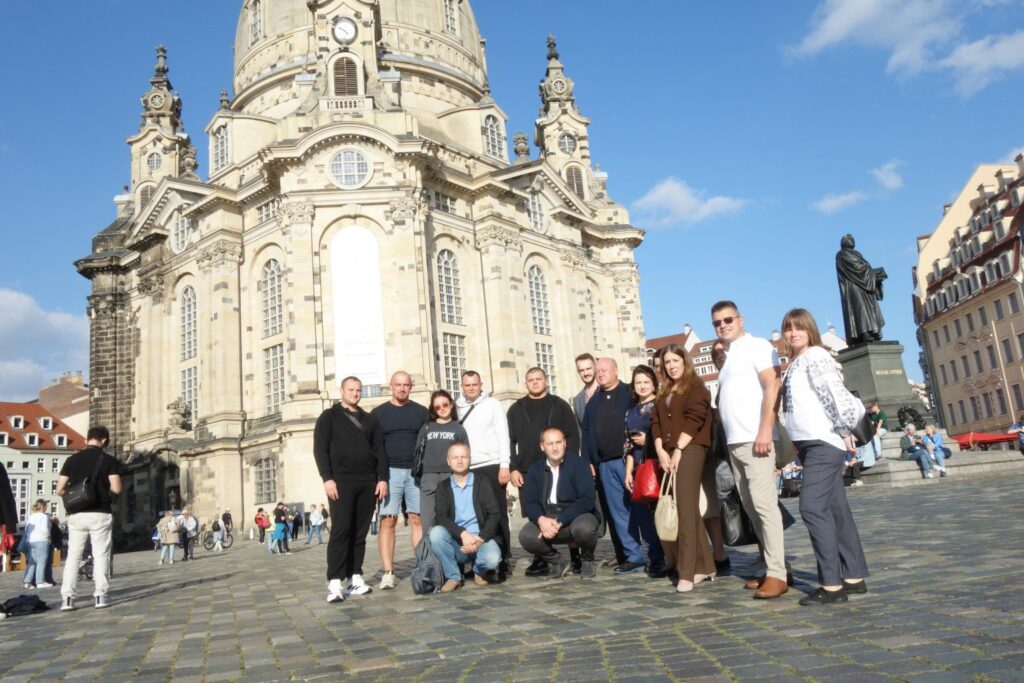
One of the key outcomes of the working visit was the identification of three specific areas for further cooperation between Khmelnytskyi National University and TU Dresden:
- research cooperation with the “Friedrich List” Faculty of Transport and Traffic Sciences;
- academic mobility and inter-university cooperation with the participation of the TU Dresden International Office;
- joint research in the fields of the circular economy and waste management with relevant research units.
In addition, Khmelnytskyi National University was invited to present the Khmelnytskyi case study at the Central European Energy Conference, to be held in Bratislava on 30 November 2026.
The working visit to Dresden was an important step in developing the international cooperation of Khmelnytskyi National University. It brought together the exchange of experience between cities and universities, work on current research issues, and the identification of concrete opportunities for academic mobility and joint research initiatives.
Khmelnytskyi National University continues to develop partnerships with European universities and municipalities, turning international cooperation into practical opportunities for students, academic staff and researchers.