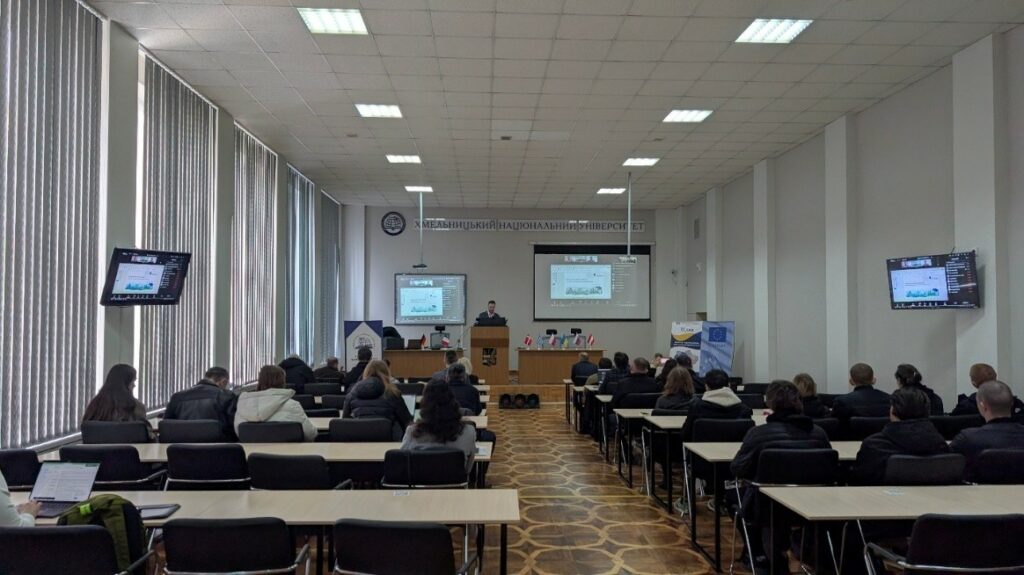
On 24 April 2026, Khmelnytskyi National University hosted the International Scientific and Practical Conference “Reducing CO₂ Emissions in Ukrainian Cities: Pathways to Climate Neutrality.” The event was organised within the framework of the international Horizon Europe project U_CAN (Ukraine towards Carbon Neutrality) and was held in a hybrid format, combining in-person and online participation from speakers from Ukraine and European Union countries.
U_CAN – Ukraine towards Carbon Neutrality – is a four-year international project funded by the European Union under the Horizon Europe programme. It is being implemented from May 2024 to April 2028. The consortium is coordinated by TU Dresden (Germany), one of Europe’s leading technical universities.
The main objective of the project is to assist Ukrainian cities in integrating into the European Green Deal and gradually moving towards climate neutrality. U_CAN is directly connected to the EU Mission “100 Climate-Neutral and Smart Cities by 2030,” providing Ukrainian communities with access to the experience, methodologies, and standards of Europe’s leading cities.
Khmelnytskyi National University is one of the key Ukrainian partners of the consortium. The university is represented by a team of researchers and specialists in computer science, artificial intelligence, and digital transport solutions, corresponding to the pilot project being implemented specifically in Khmelnytskyi.

The conference began with welcoming speeches from KhNU Rector Serhii Matiukh, Vice-Rector for Research Oleh Syniuk, and Vice-Rectors for Academic Affairs Kateryna Skyba and Dmytro Vasylkivskyi.
In their addresses, the speakers emphasised the relevance of climate issues to Ukrainian cities and the significance of the U_CAN project as a platform that combines scientific research, practical urban needs, and international expertise. It was noted that KhNU is currently implementing more than 8 international projects, of which U_CAN is the only one under Horizon Europe. Its uniqueness lies in the integration of scientific, technological, and managerial components.
“This conference and the U_CAN project represent a genuine gateway for Khmelnytskyi and for Ukraine as a whole into the European space of scientific and climate cooperation. Such projects play one of the key roles in integrating the Ukrainian scientific community into the European research area,” was stated during the opening.
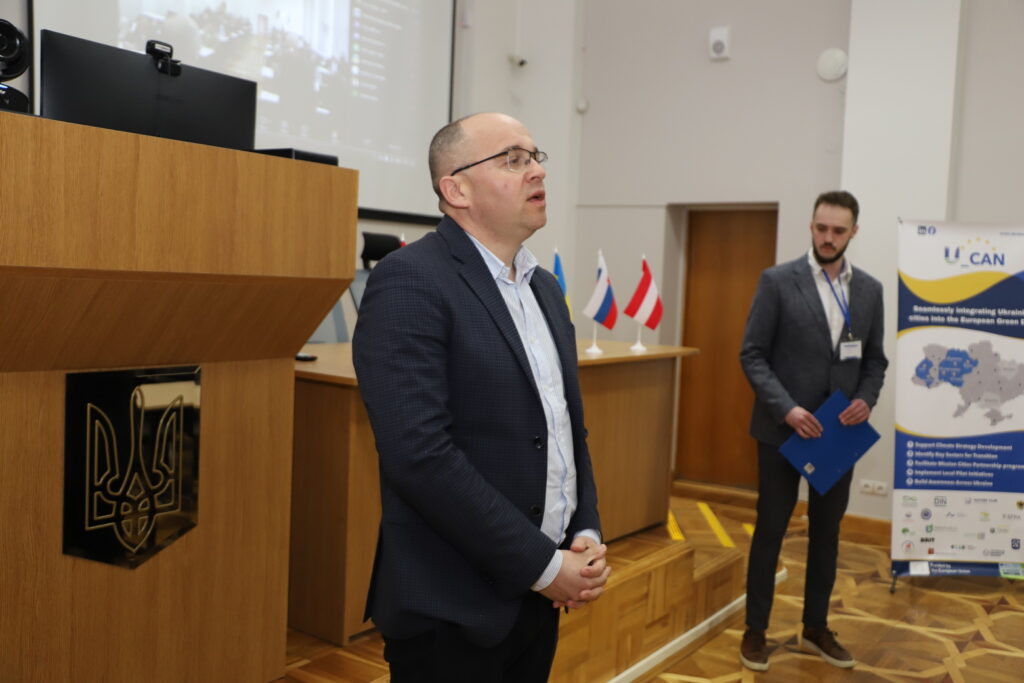
The plenary session and the first thematic session focused on the experience of European partners in sustainable urban mobility and low-carbon development.
Swati Kulashri, U_CAN project coordinator from TU Dresden, presented an overview of the project’s goals, key directions, and its connection to the broader European climate strategy. Frances Wise, project manager at Mobilities for EU, and Jonas Falbush, Deputy Managing Director of Mobility2Grid, highlighted approaches to urban transport decarbonisation and the integration of electromobility into urban systems that have already been tested in EU cities.
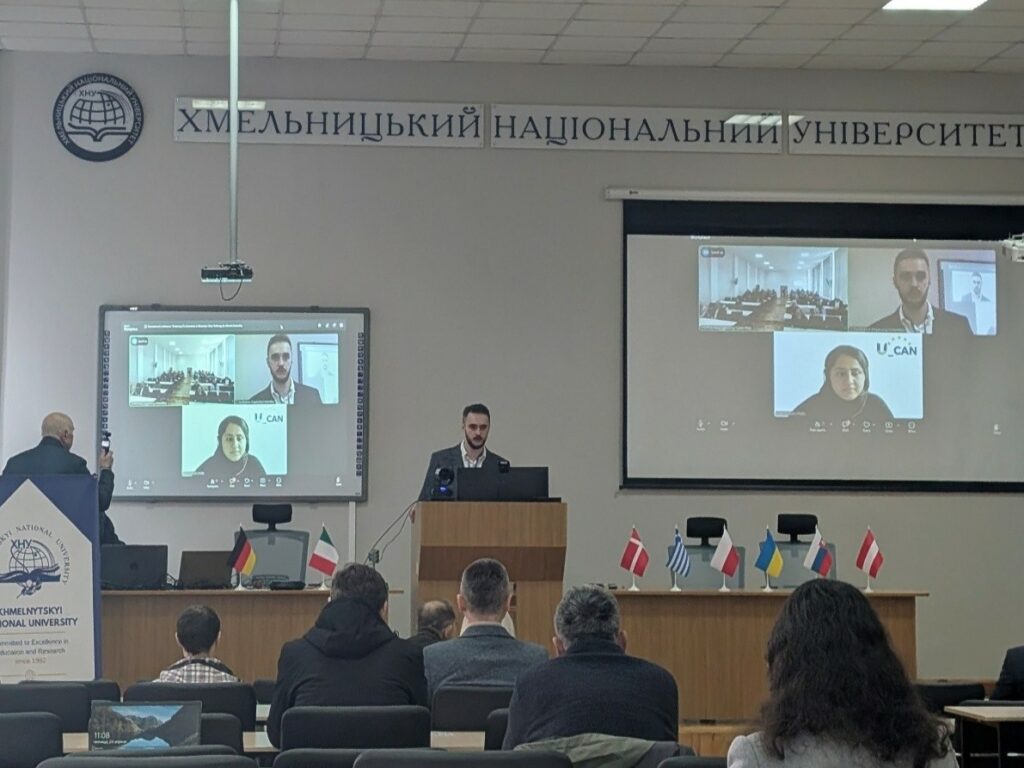
Researchers from Wrocław University of Science and Technology (Poland) and Aarhus University (Denmark) shared studies on the transformation of transport systems and on methodologies for involving residents in sustainable urban development planning processes. These approaches have already been piloted in partner cities and may be adapted for Ukrainian communities.

The second thematic session brought together practitioners from several Ukrainian cities who presented their experiences implementing emission-reduction measures.
Representatives of Khmelnytskyi City Council – Serhii Bobukh, Head of KhKP Elektrotrans, and Vasyl Kabalskyi, Deputy Director of the Department of Infrastructure – reported on the strategy for the development and modernisation of urban electric transport, measures to improve energy efficiency in the city, and the modernisation of municipal infrastructure.
Maksym Kravchuk, Chief Spatial Planning Expert at the Vinnytsia City Council’s Spatial Development Agency, presented the role of urban planning in creating environmentally friendly and resident-oriented urban environments.
Taras Mazur, Head of Transport Planning and Modelling at Lvivavtodor, outlined Lviv’s practice of applying transport modelling and traffic management to reduce emissions and improve the efficiency of the transport system.
Yurii Polianskyi, Regional Development Manager at the Institute of the City of Lviv City Council, introduced participants to Lviv’s urban planning approaches to transforming city space, particularly in the context of developing active mobility networks.
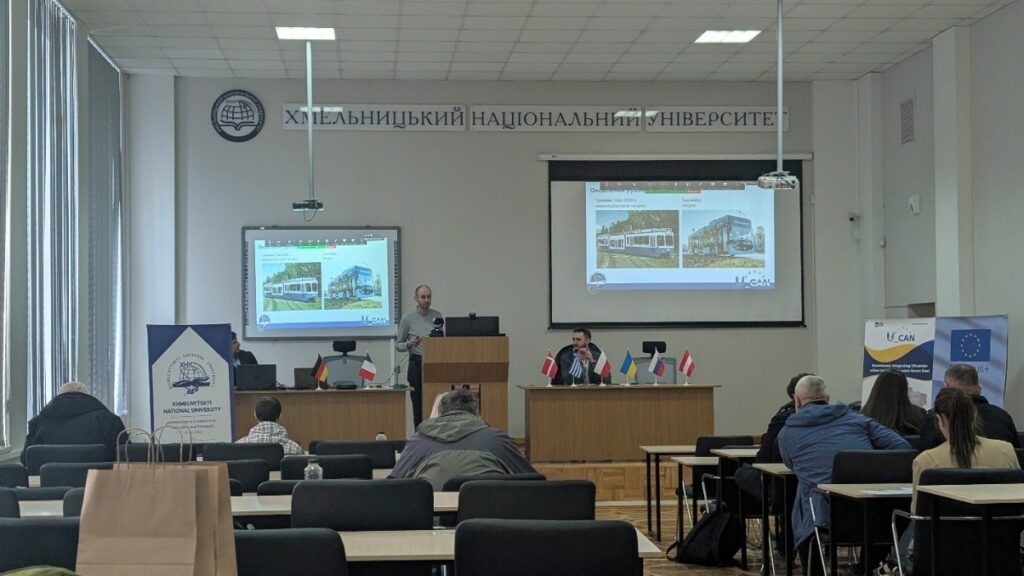
A separate section of the conference was devoted to digital tools for monitoring, analysing, and managing urban infrastructure to reduce CO₂ emissions.
Associate Professor Olena Han from the Department of Geoengineering at Kyiv Polytechnic Institute presented geoengineering approaches to mitigating the consequences of climate change. Ivan Pidopryhora, Deputy Director of KhKP Spetskomuntrans and Head of the Smart Environment Office at Khmelnytskyi City Council, discussed digital monitoring practices for urban environments.
A central highlight among the presentations by KhNU researchers was the introduction of an adaptive traffic management system developed by the university’s Department of Computer Science. Professor Eduard Manziuk and Associate Professor Pavlo Radiuk presented research that uses a network of city surveillance cameras to train an artificial intelligence system capable of managing traffic in real time.
The system takes into account terrain, traffic intensity, and social priorities, including the presence of educational institutions or healthcare facilities near intersections. Each traffic node is configured individually. According to the developers’ calculations, implementing the system will significantly increase the capacity of problematic intersections and substantially reduce CO₂ emissions from transport, without requiring changes to the existing road infrastructure.
The speakers emphasised: “The system uses city video cameras – we can connect to them, train the algorithm, and thereby regulate traffic while taking into account terrain, local priorities, and the specific needs of each individual intersection.”
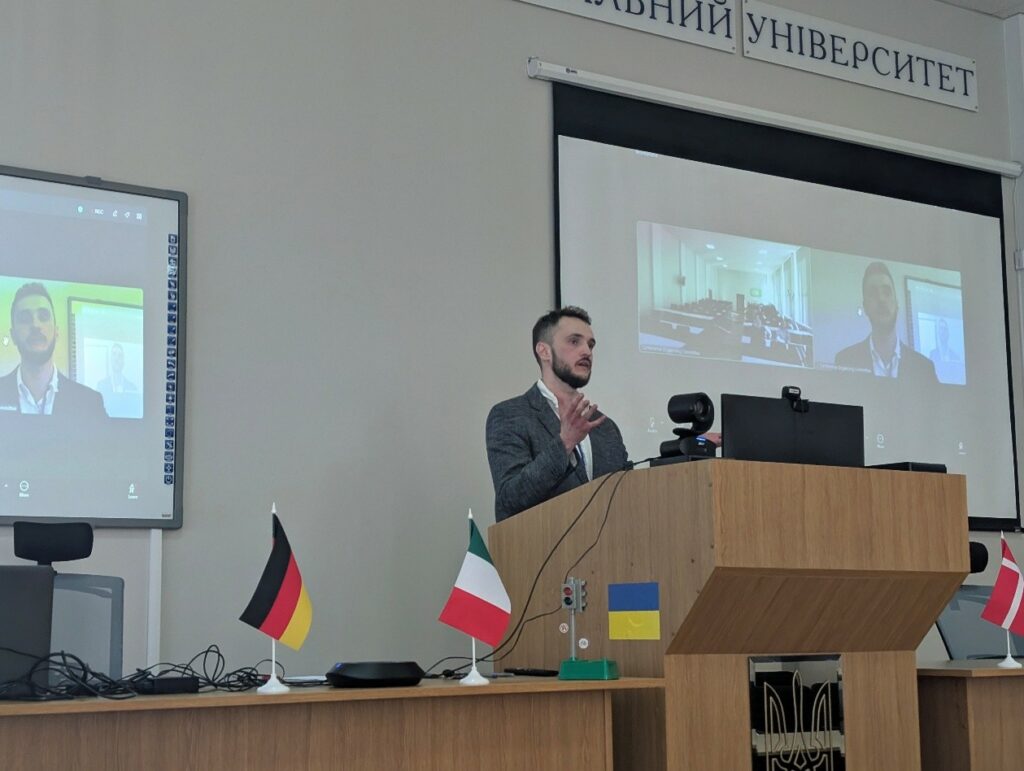
The conference was an important step in implementing the U_CAN project and confirmed the consortium’s practical capacity to unite scientific developments with the needs of urban practice. The participation of representatives from local governments, international partners, and academic staff ensured the interdisciplinary nature of the discussions.
For Khmelnytskyi as a pilot city within the project, participation in the conference means not only presenting its own developments but also gaining direct access to tested solutions and standards from European Union cities. The implementation of the smart traffic management pilot project may subsequently serve as a basis for scaling and replicating this experience in other Ukrainian cities.
Project Information: U_CAN
Full title: Ukraine towards Carbon Neutrality Programme: Horizon Europe, Grant Agreement No. 101148374 Implementation period: May 2024 – April 2028 Coordinator: TU Dresden (Germany) Consortium partners: 21 organisations from Germany, Poland, Denmark, Austria, Slovakia, Greece, Italy, and Ukraine Pilot cities: Khmelnytskyi, Lviv, Kyiv, Zhytomyr, Ivano-Frankivsk, Vinnytsia
www.ucan-ukraine.eu | U_CAN@tu-dresden.de
The project is funded under the HORIZON-MISS-2023-CIT-02 call, Grant Agreement No. 101148374. The views and opinions expressed are solely those of the authors and do not necessarily reflect those of the European Union or the CINEA agency. Neither the European Union nor the granting authority can be held responsible for them.