How can Ukrainian cities be integrated into the European energy system? How can road traffic become not only “smart” but also environmentally safe? These questions were at the centre of discussions at one of the most influential events in the region — the 19th Central European Energy Conference (CEEC), held on 24–25 November in Bratislava, Slovak Republic.
Khmelnytskyi National University (KhNU) was represented at this international platform by Pavlo Radiuk, Associate Professor at the Department of Computer Science. He participated in the discussions as a representative of the international project team, “U_CAN – Ukraine towards Carbon Neutrality.”
The project “U_CAN: Ukraine towards Carbon Neutrality” is implemented within the European Union’s Horizon Europe programme and funded with the support of the European Commission. The consortium aims to support Ukrainian cities in their transition towards climate neutrality, develop tools to reduce CO₂ emissions and implement adaptive traffic management.
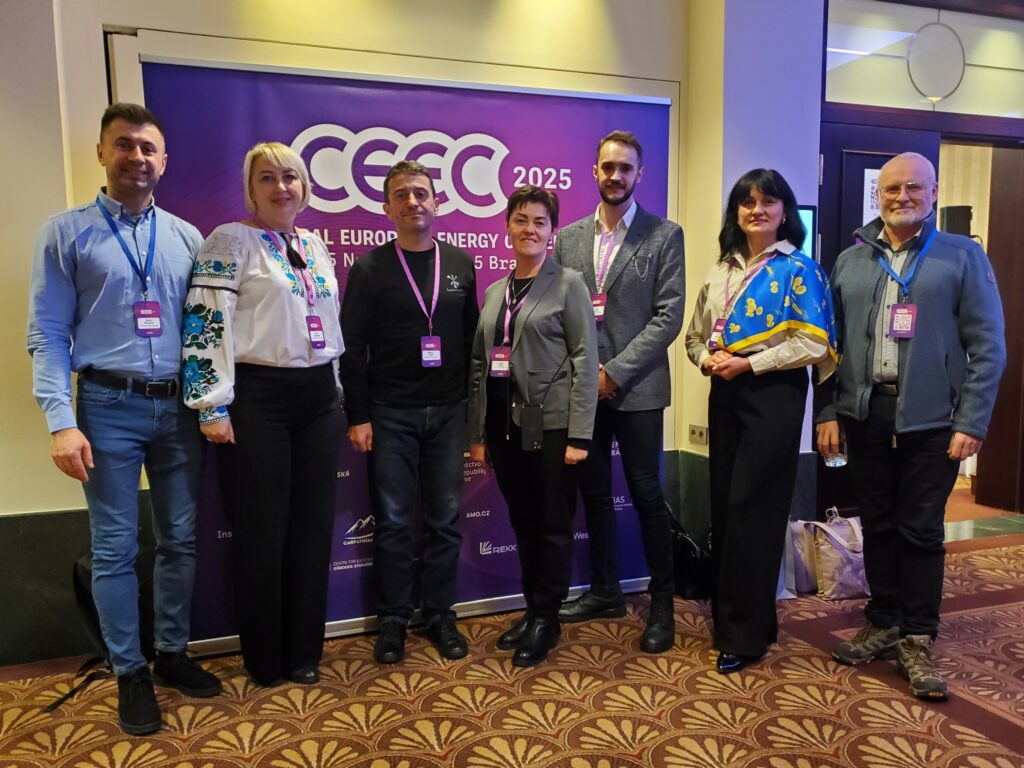
This year’s CEEC XIX was held under the telling motto “Decarbonizing with purpose.” The event brought together policymakers, experts, municipal representatives and academics from across Central Europe. The core message of the forum was clear: energy security and climate objectives can no longer exist separately, and cities are becoming the key driving force of change.
For the KhNU team, participation in such an event is an opportunity to align its research trajectory with European trends. The U_CAN project, which unites the efforts of researchers and municipalities from six cities (Khmelnytskyi, Lviv, Kyiv, Zhytomyr, Ivano-Frankivsk, and Vinnytsia) under the coordination of Dresden University of Technology, is specifically aimed at the practical implementation of the European Green Deal in Ukraine.
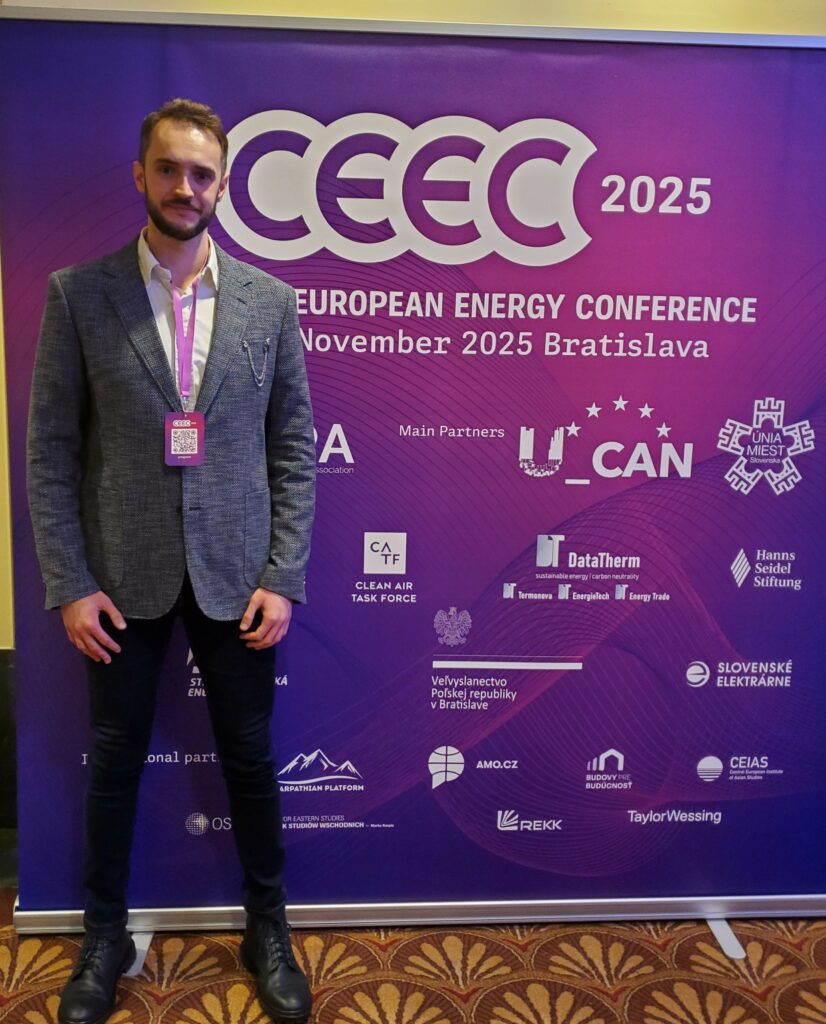
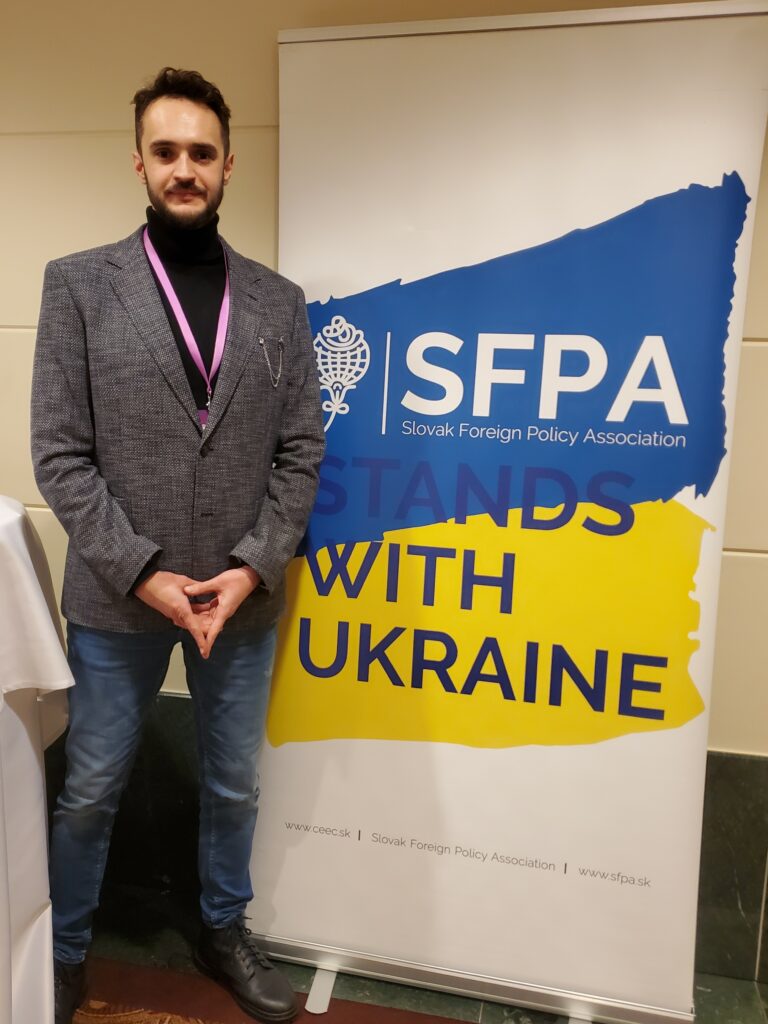
Within the U_CAN consortium, Khmelnytskyi holds a special niche, being responsible for transforming the transport system. Pavlo Radiuk presented to partners the current achievements and the vision of the pilot project, developed by the Department of Computer Science team in cooperation with the City Council.
While the focus was previously mostly on the technical aspects of automation, the project objective has now become significantly more complex following a deeper immersion into the European context. The principal result of the KhNU team’s work will be the development of a framework for a low-carbon adaptive traffic management system.
This goes far beyond adjusting traffic lights. University researchers are working on a clear action plan to reduce CO₂ emissions through optimised traffic control. The system will be based on the collection of real-world data, traffic flow modelling and algorithms that prioritise not only travel efficiency but also the reduction of environmental impact.

Participation in panel discussions and round tables at CEEC enabled Pavlo Radiuk to identify several strategic directions that the KhNU team will integrate into its further work:
1. Transport in the spotlight of climate policy (ETS2). From 2027, the EU plans to extend the Emissions Trading System to the road transport sector. This means that the carbon footprint of vehicles will have an actual price. The framework being developed by KhNU must respond to this new reality by offering the city tools to balance transport flows while accounting for environmental and economic factors.
2. Financing for “smart” transformation. The conference underlined a clear message: European funds are ready to support the reconstruction and modernisation of Ukrainian cities, but priority will be given to projects with a strong environmental component. KhNU’s solution is positioned precisely as an investment in sustainable development, opening the door to grant funding for scaling the system city-wide.
3. Human-centred technologies. Discussions on climate governance reaffirmed the project team’s stance: technological solutions must serve the community. Traffic optimisation must consider the interests of all road users — pedestrians, cyclists, and public transport passengers — ensuring social fairness in urban spaces.
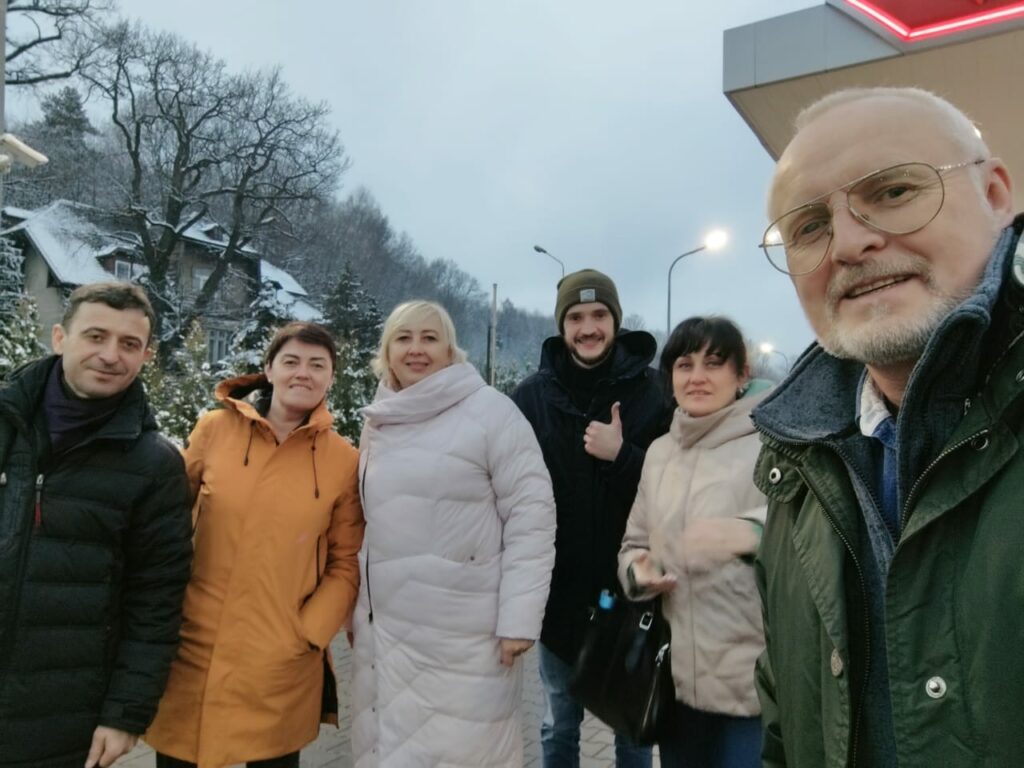
The return from Bratislava marks a new stage in the development of the pilot project in Khmelnytskyi. The insights gained and the connections established with European colleagues will be incorporated into the Implementation Plan, which the team is set to finalise by 2026.
The participation of KhNU representative Pavlo Radiuk in CEEC XIX once again demonstrated that Khmelnytskyi National University is not only an educational institution but also a strong research hub capable of generating solutions at a European level. The creation of a framework for a low-carbon adaptive traffic management system will become KhNU’s real contribution to transforming Khmelnytskyi into a modern, climate-neutral and comfortable European city.
Work within the U_CAN project continues. Stay tuned for updates!