As part of the implementation of strategic initiatives aimed at advancing modern approaches to spatial planning, transport modelling, the digital transformation of urban systems, and the introduction of sustainable development principles, academic staff of Khmelnytskyi National University participated in a professional training course titled “PTV Visum – Introduction to Macroscopic Modelling”. The training was held from 20 to 22 January 2026 at Khmelnytskyi National University within the framework of developing the Sustainable Urban Mobility Plan (SUMP) for the city of Khmelnytskyi. The event was focused on building practical competencies in the use of modern software tools for analysing traffic flows, modelling scenarios for urban infrastructure development, optimising public transport route networks, forecasting population mobility, and assessing the socio-economic and environmental impacts of managerial decisions.
The Sustainable Urban Mobility Plan is a comprehensive, long-term strategic planning document that defines priorities for the development of the city’s transport system, taking into account the principles of safety, accessibility, environmental responsibility, inclusiveness, and the improvement of the quality of the urban environment. Its implementation is aimed at shaping a balanced transport policy, improving public transport route networks, developing pedestrian and cycling infrastructure, optimising traffic flows, reducing congestion, lowering greenhouse gas emissions and other pollutants, and creating comfortable and safe mobility conditions for residents and visitors to the community.
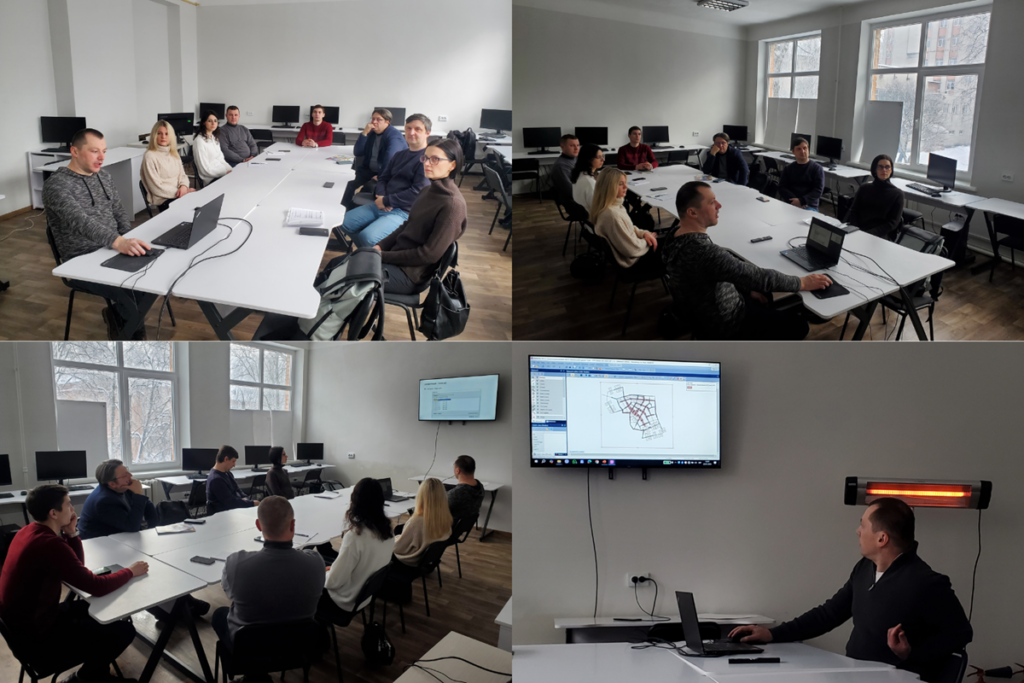
In March 2023, the city of Khmelnytskyi received grant funding to develop the Sustainable Urban Mobility Plan. The project is being implemented by the international A+S Consortium, comprising companies from Germany, Italy and Croatia, which won an open international tender among nine companies from Ukraine and other countries. The consortium has extensive experience in preparing strategic documents in the field of transport planning and urban mobility, including the development of Germany’s national transport master plan, as well as mobility plans for the State of Hesse and the city of Düsseldorf. In accordance with the contract terms, the consortium’s experts are carrying out a comprehensive analysis of the current state of the city’s transport system, including assessment of road infrastructure, efficiency of public transport routes, traffic flow intensity, traffic signal control and road markings, as well as forecasting long-term scenarios for the development of urban mobility.
Special attention is given in the development of the Plan to road safety, accessibility of the urban environment for people with reduced mobility, the development of barrier-free infrastructure, the integration of different modes of transport, and environmental aspects of the transport system’s operation. An important element of the process is active public engagement through consultations, surveys and public discussions. The project is fully financed by the European Bank for Reconstruction and Development (EBRD) through a non-repayable grant.
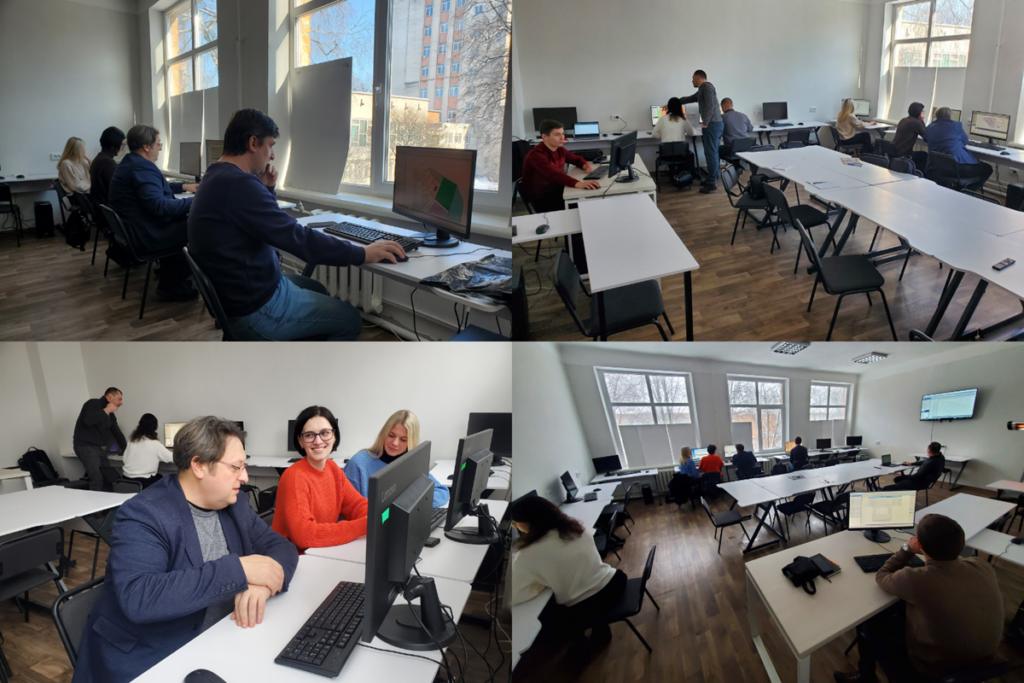
The involvement of higher education institutions in such processes is of strategic importance for building regional expert capacity, developing applied research, and training specialists capable of working with modern digital models and analytical tools. The engagement of academic staff from Khmelnytskyi National University in mastering transport modelling tools contributes to the development of horizontal integration between education, science, local self-government bodies, international expert networks, and the business environment, and creates the prerequisites for sustainable partnerships and the implementation of interdisciplinary initiatives.
Mastering the PTV Visum software has direct practical relevance for the implementation of the pilot direction “Pilot 1: Adaptive Traffic Management System with a Focus on Emission Reduction” within the Horizon Europe U_CAN project, in which Khmelnytskyi National University is actively involved. Macroscopic modelling tools enable systematic analysis of transport scenarios, simulation of traffic flow behaviour under different conditions, assessment of traffic management effectiveness, and forecasting the impact of managerial decisions on emission levels, energy consumption, population mobility, and the accessibility of urban areas. The competences acquired during the training provide a scientific and methodological basis for preparing analytical materials, forming an evidence base for decision-making, producing joint publications and expanding international cooperation within Horizon Europe.
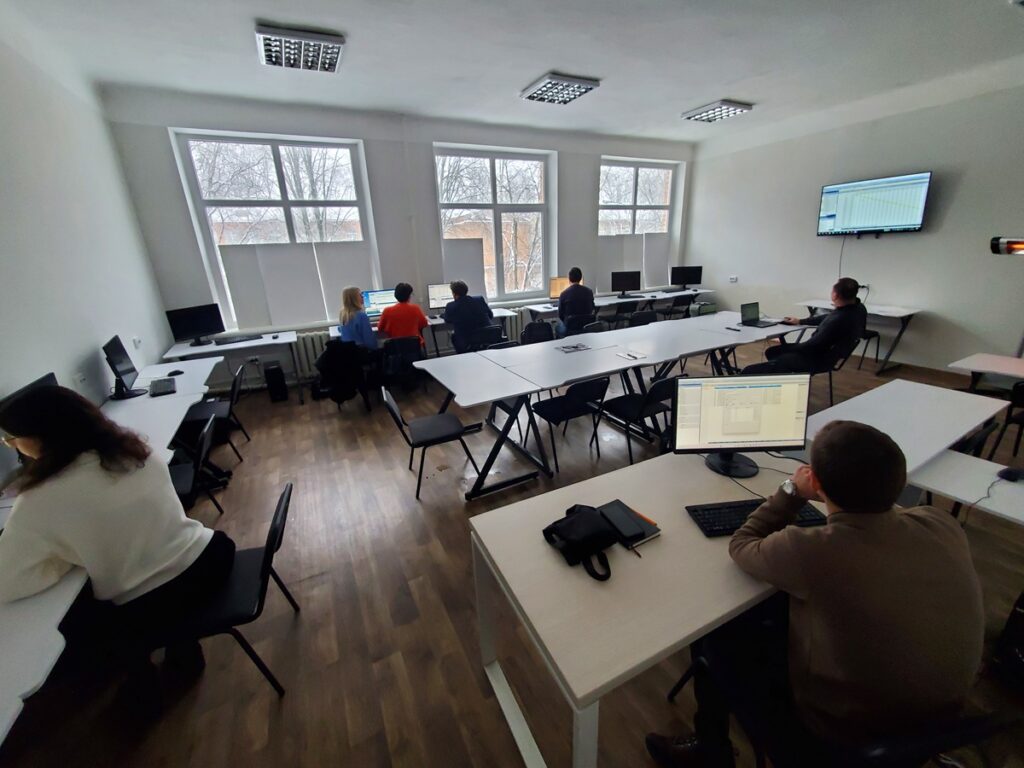
Representatives of the Khmelnytskyi City Council also took part in the training, which contributed to strengthening practical interaction between the university community, local self-government bodies and experts in spatial and transport planning, as well as to developing a shared vision of further implementation of strategic initiatives in the fields of urban mobility, climate neutrality and digital governance of urban systems.
On behalf of Khmelnytskyi National University, the training was organised by Oleh Syniuk, Vice-Rector for Research, Kateryna Skyba, Vice-Rector for Academic and Pedagogical Affairs, and Pavlo Radiuk, Associate Professor of the Department of Computer Science, who ensured an appropriate level of coordination, organisational support and effective interaction among all participants in the training process.
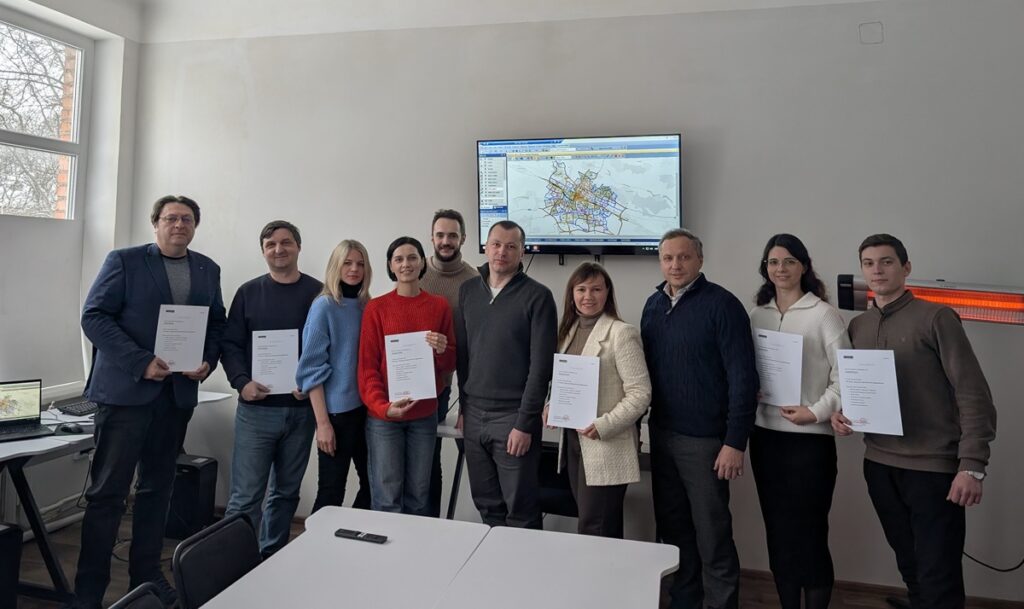
Participants in the training included:
- Viktor Lysak – Associate Professor, Department of International Economic Relations, Khmelnytskyi National University.
- Olena Savchenko – Associate Professor, Department of Management and Administration, Khmelnytskyi National University.
- Pavlo Radiuk – Senior Lecturer, Department of Computer Science, Khmelnytskyi National University.
- Vitalii Alekseiko – Assistant Lecturer, Department of Computer Engineering and Information Systems, Khmelnytskyi National University.
- Ruslan Bahrii – Associate Professor, Department of Computer Science, Khmelnytskyi National University.
- Inna Chaikovska – Professor, Department of Economics, Analytics, Modelling and Information Technologies in Business, Khmelnytskyi National University.
- Bohdan Solovei – Chief Specialist, Department of Transport and Communications, Khmelnytskyi City Council.
- Mariia Lisitsyna – Chief Specialist, Road Infrastructure Safety Unit, Department of Municipal Infrastructure, Khmelnytskyi City Council.
- Volodymyr Yakovets – Head of the Specialised Installation and Maintenance Unit of the Municipal Enterprise for Road Construction, Repair and Operation.
The representation of various academic disciplines ensured an interdisciplinary approach to introducing modern transport analysis and modelling tools into the university’s educational, research, and project activities.
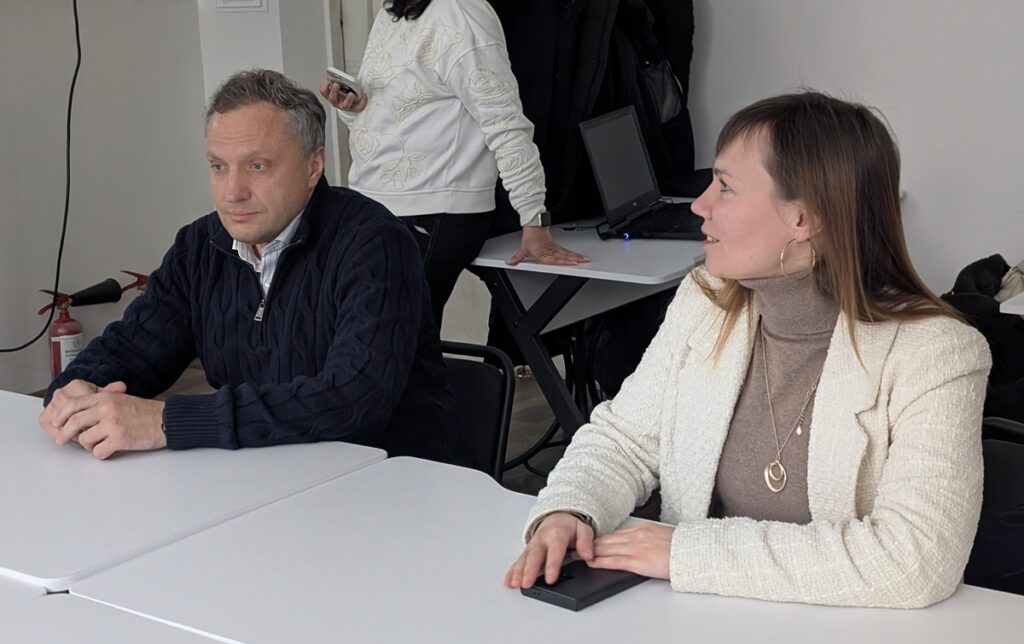
The training was delivered by Volodymyr Tarasiuk, PhD in Technical Sciences, Head of the Laboratory for Spatial Planning and Traffic Flow Modelling at the Kyiv National University of Construction and Architecture. His professional activity is associated with research in transport modelling, spatial analysis, energy efficiency of transport systems and the implementation of digital tools to support managerial decision-making in urban development. The trainer’s practical experience ensured a high level of applied orientation of the training and enabled participants to work through real-world case studies.
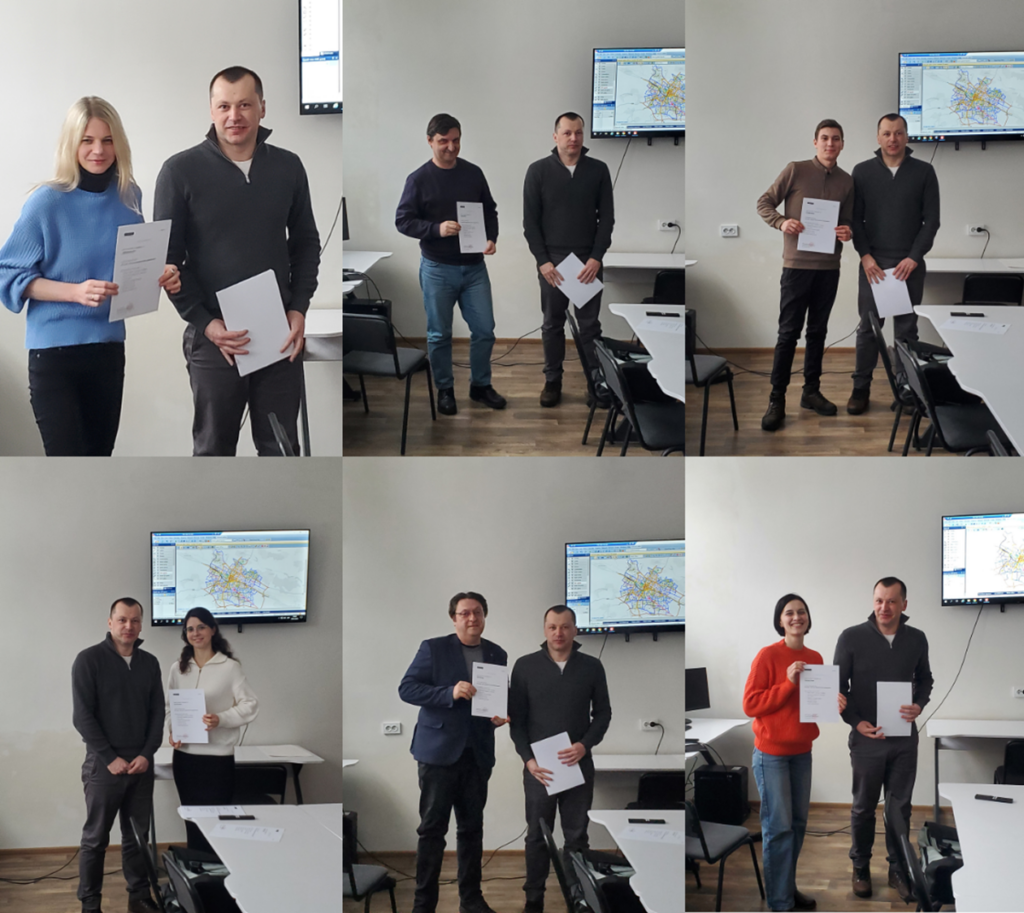
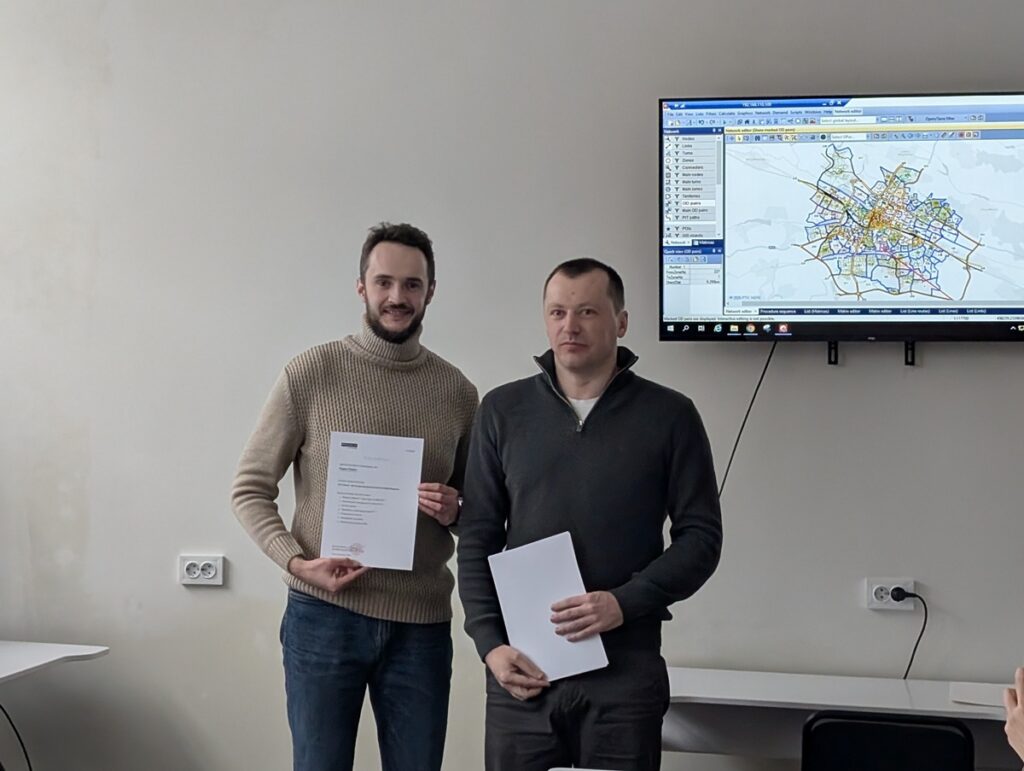
The training concluded with a certificate award ceremony confirming successful completion of the programme and acquisition of relevant professional competences. During the closing session, the trainer expressed gratitude to the participants for their high level of engagement, active interactive cooperation, constructive exchange of experience and valuable suggestions regarding further improvement of the software’s functional capabilities.
The results achieved provide a foundation for further integrating transport modelling tools into educational programmes, research activities, the development of interdisciplinary courses, the preparation of student projects, and expert support for the city’s strategic initiatives. This strengthens the role of Khmelnytskyi National University as a centre of applied analytics, scientific expertise and a partner to local self-government bodies in implementing innovative sustainable development solutions at the regional level.
Khmelnytskyi National University expresses its sincere gratitude to the European Bank for Reconstruction and Development for financial support in developing the Sustainable Urban Mobility Plan for the city of Khmelnytskyi; to the Khmelnytskyi City Council for openness to partnership, support for professional capacity development and assistance in establishing sustainable mechanisms of cooperation between the university, the community and international expert environments; and to the international A+S Consortium for its high level of expert support, professional organisation of the training process, exchange of practical experience, and contribution to the integration of European sustainable urban development practices into the Ukrainian context.