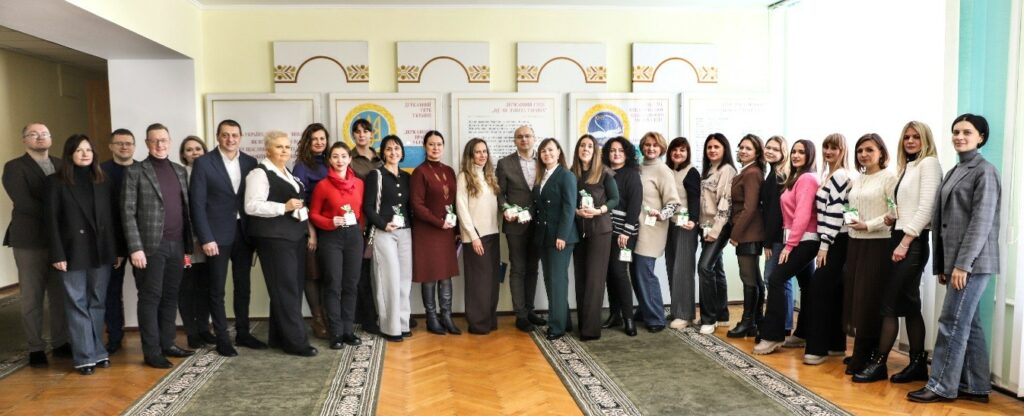
On 16 February, Khmelnytskyi National University hosted the final conference of the project “3R SheLeader: Resilience, Resourcefulness, and Resultfulness.” Implemented in partnership with Bangor University (UK) and supported by the British Council under the Gender Equality Partnerships programme, the initiative marked an important milestone in advancing systemic change towards gender equality in Ukrainian higher education.
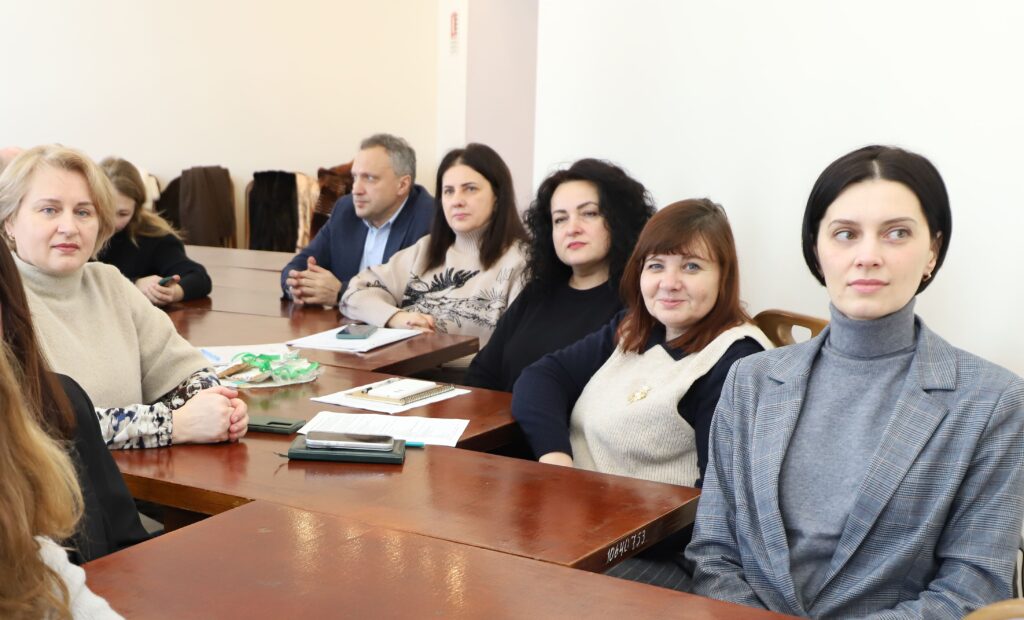
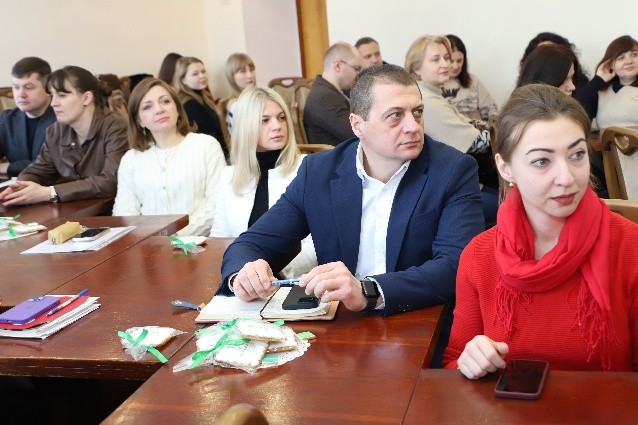
The conference was opened by Vice-Rector for Academic Affairs and Project Manager Kateryna Skyba. She noted that, despite the war, the university continues to collaborate with international partners, and that the 3R SheLeader project has become a powerful tool for transforming leadership and management approaches.
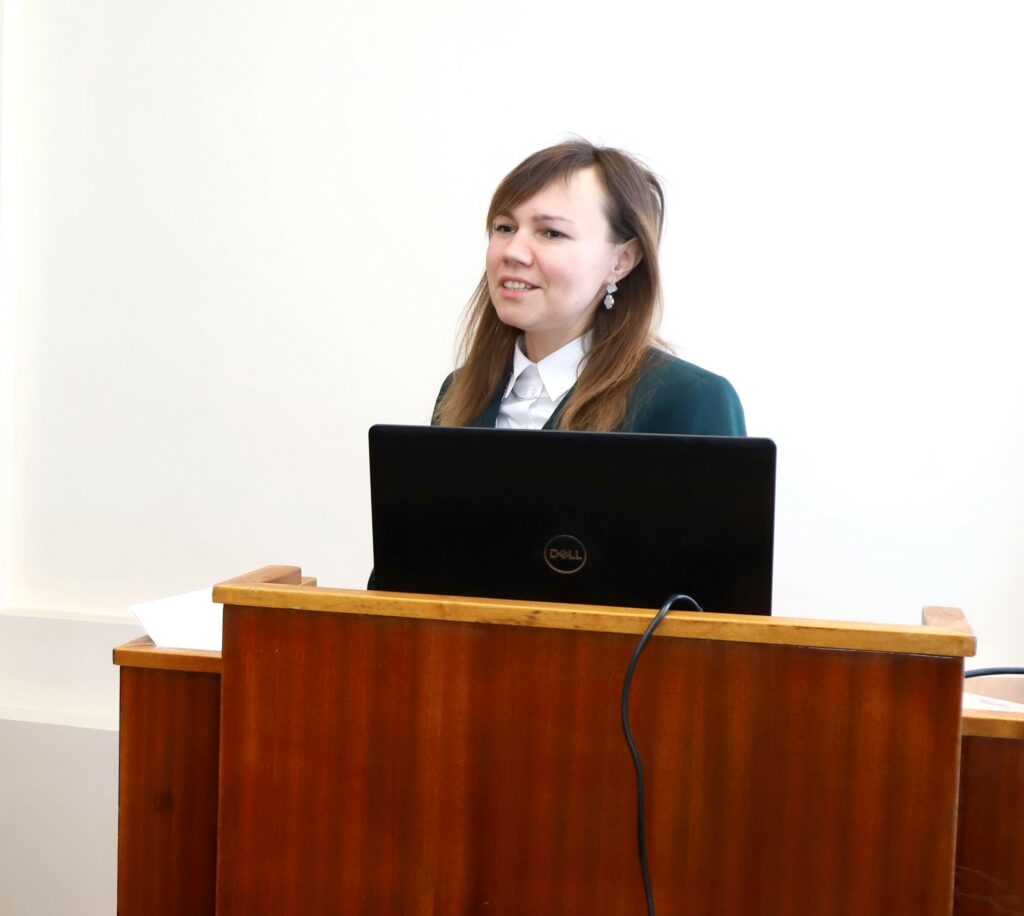
The UK Project Coordinator, Professor Morag McDonald, highlighted the high level of trust between the universities, which enabled the development of a strong strategic partnership. Bangor University Pro-Vice-Chancellor Oliver Turnbull drew historical parallels, sharing the story of the Welsh feminist movement of the early twentieth century—the Welsh Women’s Peace Petition.


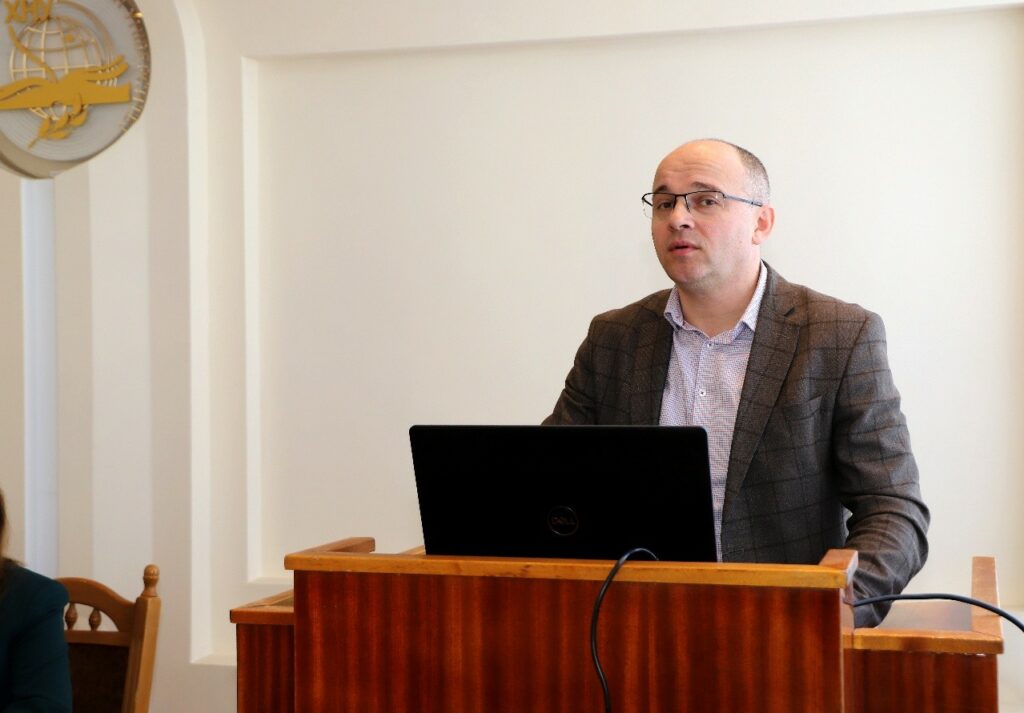
One of the key stages of the project was a survey of male leaders in higher education exploring their attitudes towards promoting women’s leadership. The results of the survey, “The Role of Male Leaders in Promoting Gender Equality in Higher Education,” were presented by Rector of Khmelnytskyi National University, Serhii Matiukh. The findings showed that while most respondents support gender equality, some believe the issue is no longer relevant in higher education. These results highlight the need for continued efforts, particularly through institutional change and raising awareness of women’s leadership.
Olena Chepeliuk, Rector of Kherson National Technical University, shared her experience of resilience during wartime. She spoke about how the university community continued to operate under occupation, evacuation, and the loss of its usual infrastructure. According to her, women leaders often take responsibility not only for organisational decisions but also for supporting their teams, preserving unity, and creating a sense of stability. She emphasised that the ability to listen, remain flexible, and maintain a clear strategic vision was critical. This helped not only to sustain the educational process but also to keep the community united during an extremely difficult period.
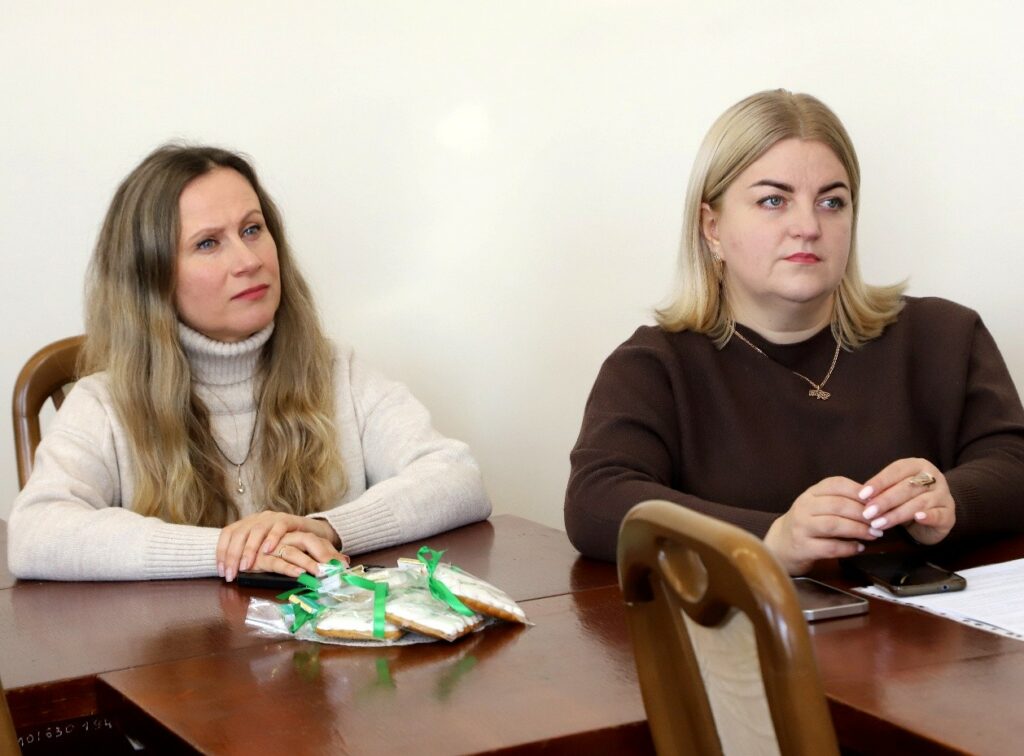
Lesia Steblo, Head of the NGO Warmth of Kindred Hearts, spoke about women in the civic sector. She shared her experience leading a volunteer community actively supporting both military personnel and civilians. She emphasised that in wartime, women not only support their families but also organise assistance, take responsibility, and become pillars of strength for others.
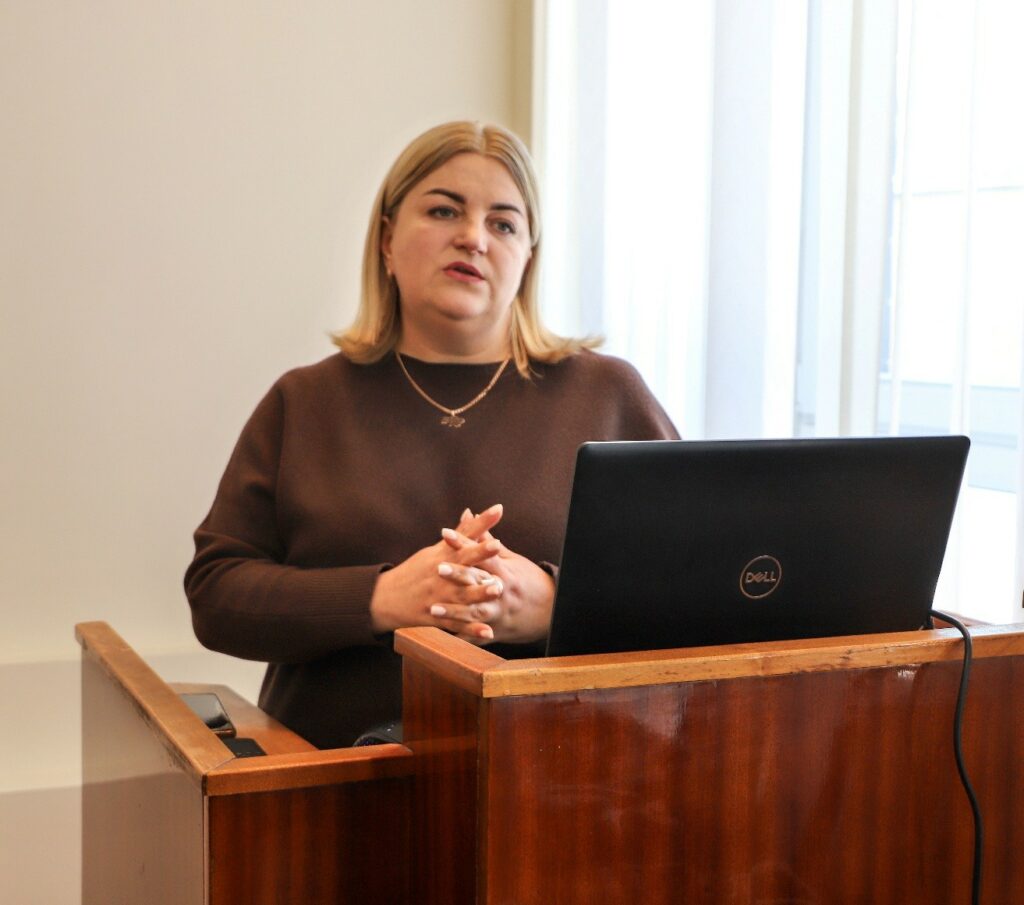
The discussion of women’s leadership development continued with Liudmyla Remishevska, Head of the International Relations Office. She led a series of training sessions for women leaders, where participants developed their internal resources and communication skills, improved their planning and decision-making, and strengthened their resilience and motivation in the face of constant challenges. Participants noted that the programme helped them better understand their potential, feel more confident in their professional roles, and find support among colleagues.
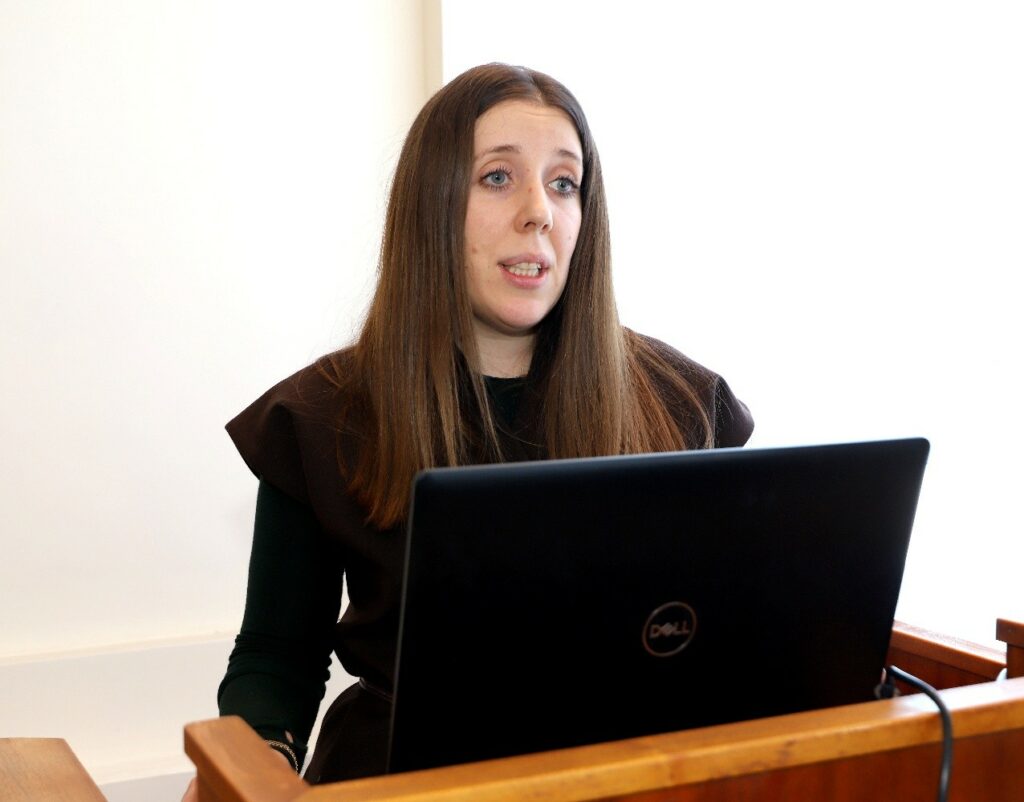
A natural continuation of the training programme was the mentoring support provided to participants. The project organised a mentoring scheme that brought together 12 pairs of mentors from Bangor University and mentees from Khmelnytskyi National University. During online meetings, British colleagues supported Ukrainian participants in developing a strategic vision, analysing professional challenges, and identifying new opportunities for growth. Associate Professor Yevheniia Shelest from the Department of HR Engineering in Business Economics shared her experience of working with a British mentor. She described regular meetings and discussions of professional goals, noting that this interaction helped her reassess her potential, gain practical advice, and plan her professional development more confidently.
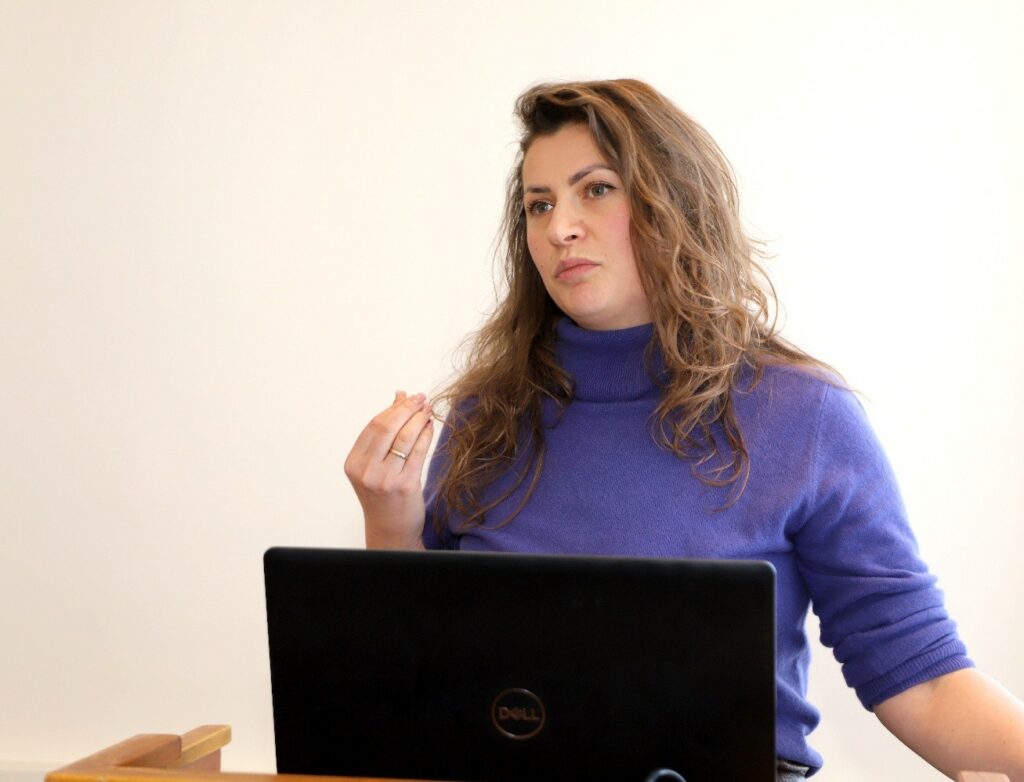
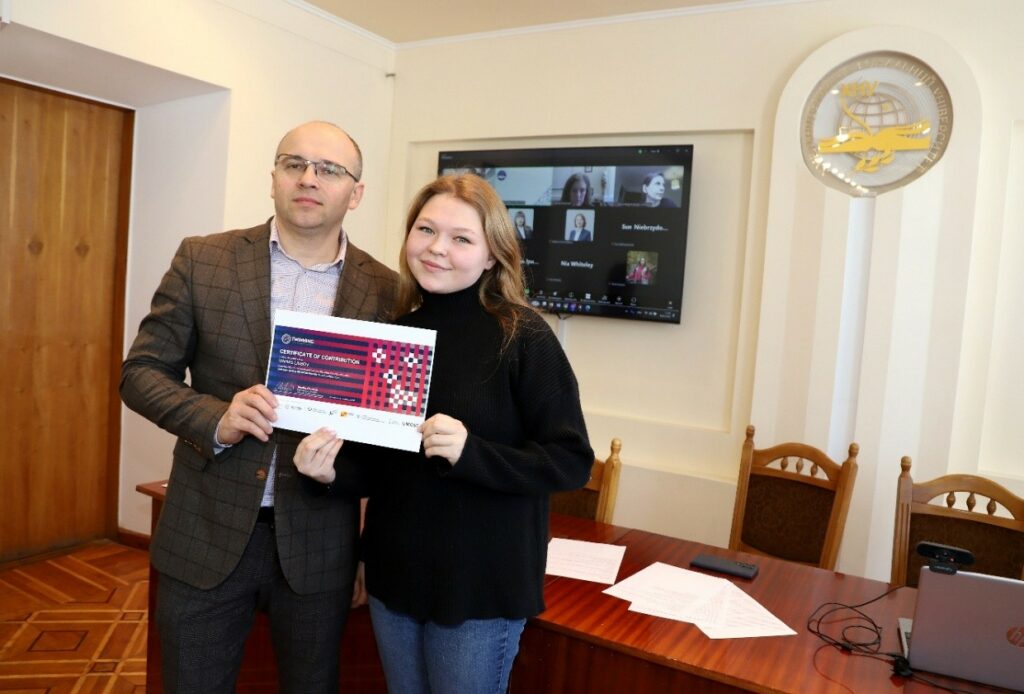
Student participation was also an important part of the conference. Liubov Mahas, Head of the Student Council of the Faculty of International Relations and Law, presented the results of a cultural exchange between students of Khmelnytskyi National University and Bangor University. As part of the project, students held meetings, exchanged video messages, and shared symbolic gifts: Ukrainian students sent souvenirs from the Khmelnytskyi region, while British students shared university and Welsh memorabilia. A pleasant surprise was the presentation of certificates to student representatives for their active participation in Ukrainian Week in Britain.
The 3R SheLeader: Resilience, Resourcefulness, and Resultfulness project has successfully laid the foundation for a new leadership policy to remove barriers for women in higher education. Participants noted that the initiative not only strengthened cooperation between the universities but also created a network of women leaders ready to face future challenges. The partnership between Khmelnytskyi National University and Bangor University will continue, supporting the further development of women’s leadership as a key factor in Ukraine’s recovery and European integration.