As part of a visit to the University of Essex (United Kingdom), Kateryna Skyba, Vice-Rector for Academic and Pedagogical Affairs of Khmelnytskyi National University, delivered a guest lecture for students and academic staff of the Department of Language and Linguistics at the University of Essex.
The seminar focused on language policy in Ukraine, addressing the historical development of the Ukrainian language. It also highlighted the resilience and strength that have enabled it to survive and continue to assert itself in contemporary conditions. The topic sparked considerable interest and lively discussion among participants.
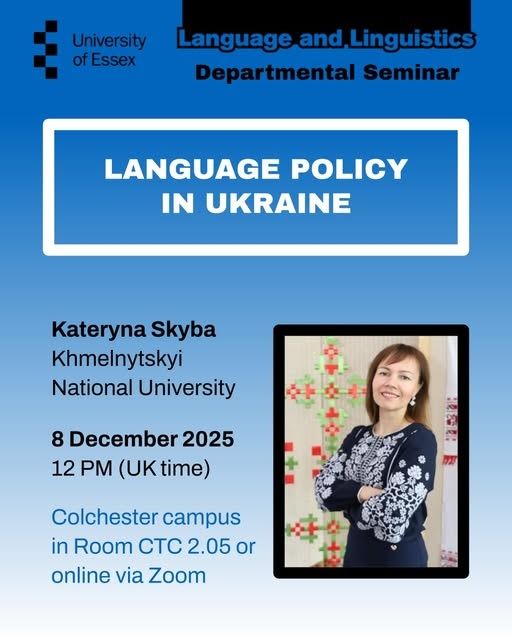
The event took place within the framework of academic cooperation between the Department of Germanic Philology and Translation Studies of Khmelnytskyi National University and the Department of Language and Linguistics of the University of Essex, as well as as part of the Ukrainian Week initiative, which aims to present an accurate, stereotype-free perspective on Ukraine, its language, culture, science, and contemporary transformations within the international academic community.
Over the past three years, Kateryna Skyba has been collaborating with the University of Essex as a visiting lecturer, contributing to academic exchange and fostering international interaction between Ukrainian and British universities.
Special attention was paid during the seminar to understanding the role of language as a key factor in the existence of a nation, a carrier of historical memory, a system of values, and the cultural code of a nation. For the international academic community, it is essential to recognise that language policy is not only a matter of communication, but also a matter of identity, security, and a people’s right to self-determination.
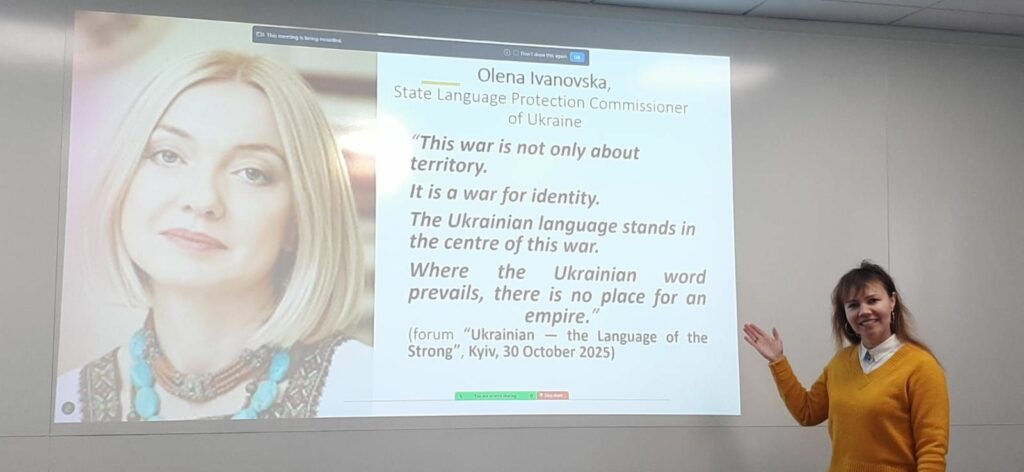
In the context of russia’s full-scale war against Ukraine, the Ukrainian language has acquired existential significance, becoming a symbol of resistance, resilience, and cultural continuity. Conveying these meanings to an international audience is critically important for fostering a deeper understanding of the Ukrainian context, supporting Ukraine, and preserving its cultural heritage as an integral part of the European space.
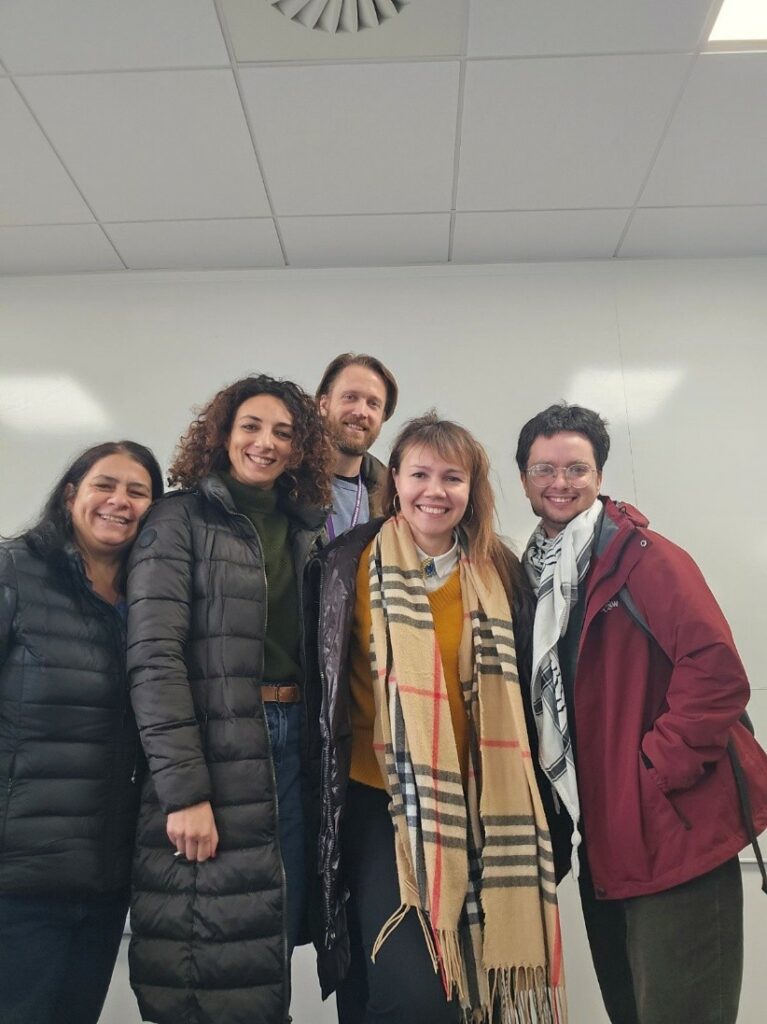
The seminar received high praise from students and academic staff and became another important step in promoting knowledge about Ukraine’s linguistic identity, cultural heritage, and European values within the international academic environment.
Слава Україні!