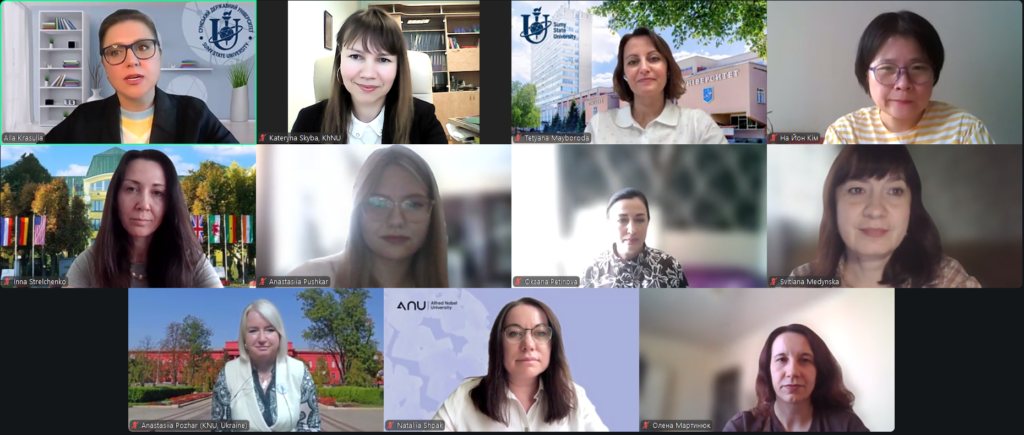
From 16 to 19 June 2026, Sumy State University hosted the online COIL Alliance of Ukrainian Universities Forum, “Virtual International Collaboration and COIL as a Tool for the Internationalisation of Higher Education.” Khmelnytskyi National University (KhNU) was represented by Kateryna Skyba, Vice-Rector for Scientific and Pedagogical Work and Olena Martyniuk, Associate Professor of the Department of Foreign Language Education and Intercultural Communication and Deputy Dean of the Faculty of International Relations and Law.
The participation of KhNU representatives marked another important step in strengthening the university’s international dimension. One of the key priorities of KhNU’s internationalisation strategy is the integration of Collaborative Online International Learning (COIL) into the educational process.
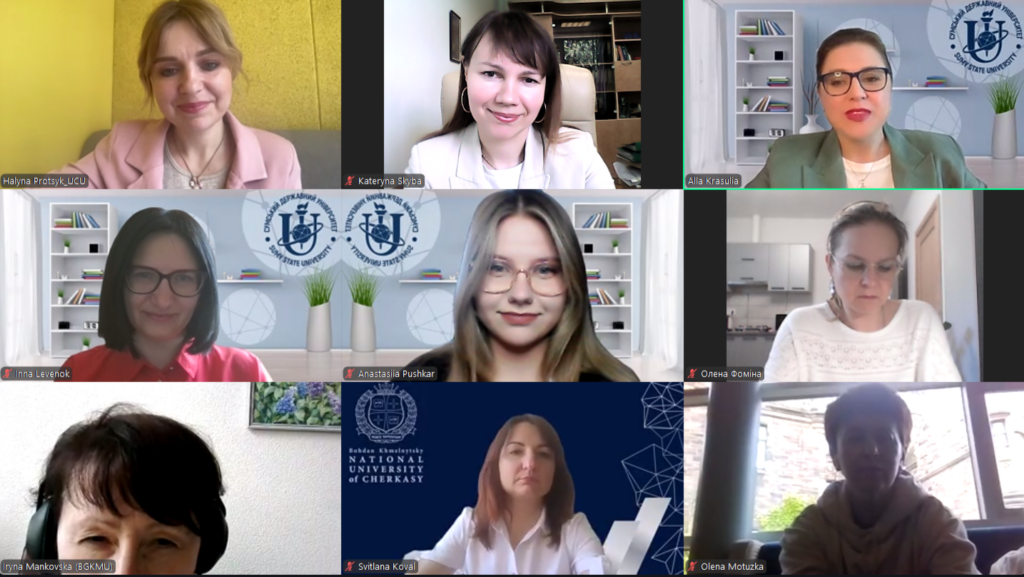
COIL is an international online collaboration model that enables lecturers and students from different countries to work together on shared learning activities, projects, and research cases. This approach fosters intercultural communication, digital competencies, critical thinking, and teamwork in an international environment.
The Forum programme covered strategic, organisational, and pedagogical aspects of COIL implementation. On the first day, participants explored the role of virtual international collaboration as a tool for accessible and inclusive internationalisation in higher education. Particular attention was given to the potential of COIL in situations where physical academic mobility is limited, ensuring that international engagement remains accessible to a much broader community of students and academics.
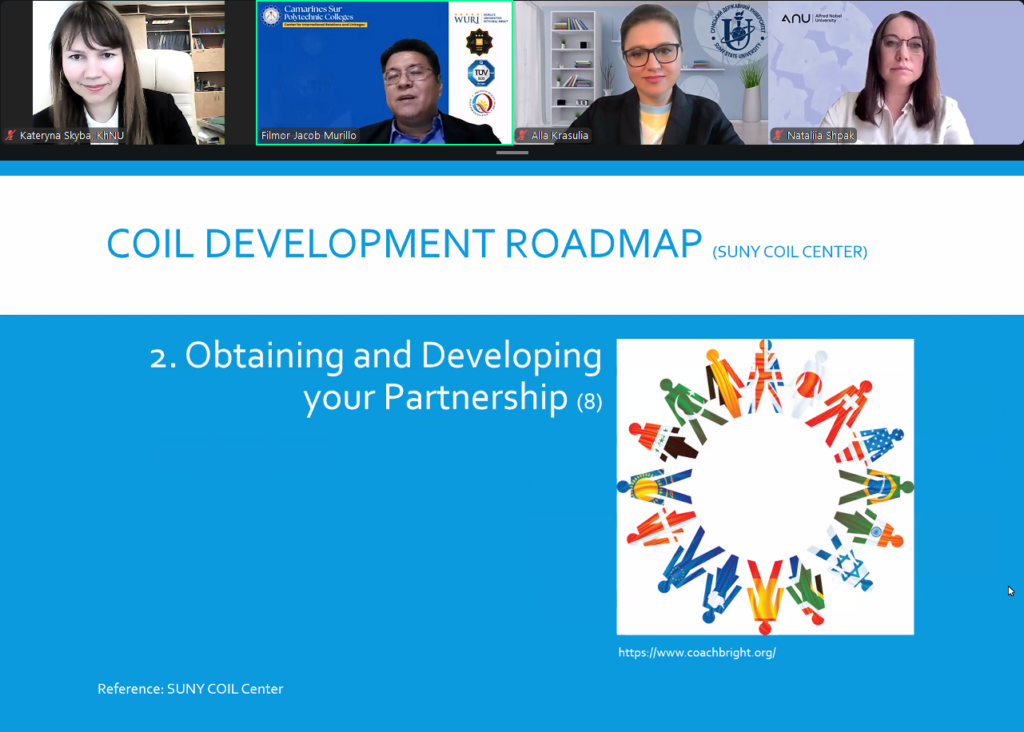
The second day focused on institutional support for COIL and virtual mobility. For KhNU, discussions on coordinating international online projects, identifying partner institutions, aligning learning outcomes, ensuring academic recognition, and providing appropriate administrative support were especially valuable. Participants emphasised that a systematic institutional approach enables individual international initiatives to become an integral part of the university’s educational process.
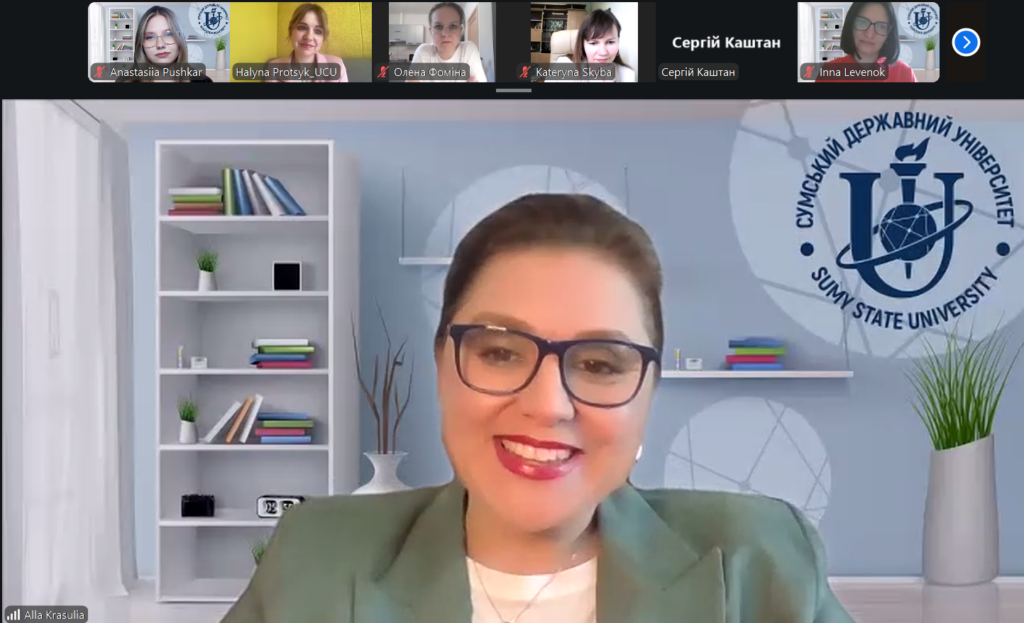
On the third day, participants examined pedagogical practices for implementing COIL in social sciences, humanities, and economics programmes. The case studies demonstrated how international online collaboration can strengthen the practical component of education, enhance students’ intercultural communication skills, and increase their confidence in professional interactions with peers from other countries.
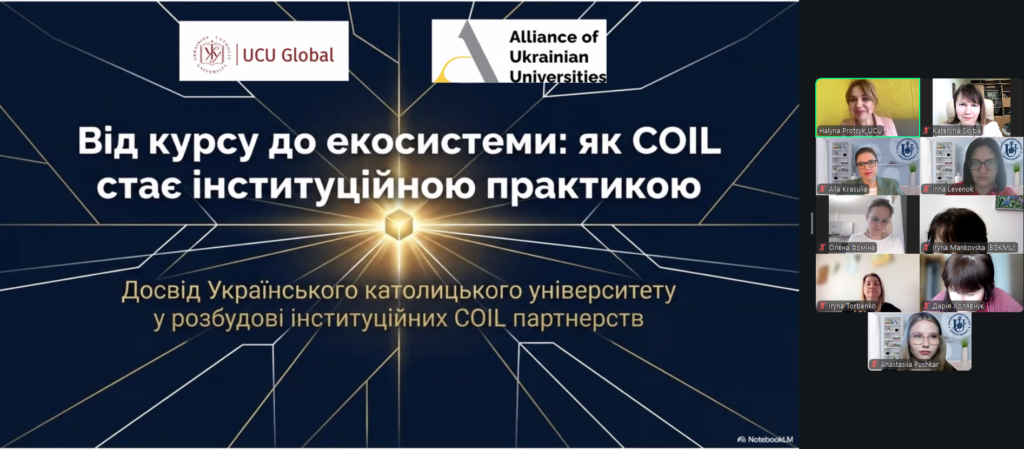
The final day of the Forum highlighted the versatility of the COIL approach. Participants showed that it is successfully applied not only in humanities and social sciences but also in engineering, natural sciences, law, and psychology programmes. Discussions confirmed that successful COIL implementation depends on strong partnerships between lecturers, well-designed pedagogy, comprehensive student support, and institutional commitment to sustaining international collaboration.
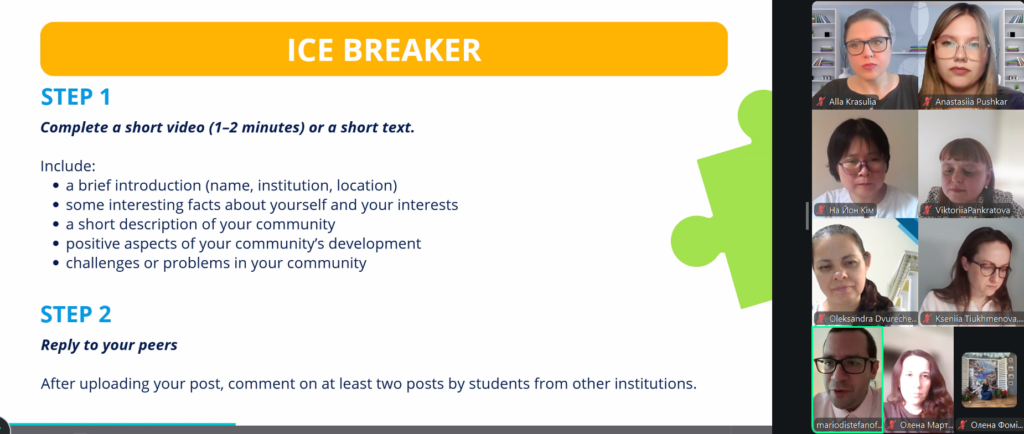
For KhNU, participation in the Forum provided an opportunity not only to learn from the experience of Ukrainian and international partners but also to identify practical priorities for further integrating COIL into its educational process. These priorities include developing lecturers’ competencies, establishing new international partnerships, creating joint online courses and projects, and gradually incorporating virtual international collaboration into students’ educational pathways.
KhNU views COIL as an important instrument of modern internationalisation, providing students with access to the global academic community while creating new opportunities for academic staff to collaborate professionally and co-design educational content. Participation in the COIL Alliance of Ukrainian Universities Forum further strengthens the university’s capacity to achieve the strategic objectives outlined in the KhNU Internationalisation Strategy 2026–2030.